Wednesday, 5 January 2022

Don't Look Up - a significant film for our time

When a film receives as many positive reviews and word-of-mouth mentions as Don't Look Up, I just have to watch it. An satirical allegory, ostensibly about a comet hurtling towards Earth, but clearly about climate change. And Covid-19. And Brexit. And Putin, Xi - any foreign threat to the West. That experts are warning us about, but to whom we pay no heed.

The film portrays the shallowness of contemporary society; glued to the social media apps on our smartphones, digesting the most moronic of news shows - there are strong parallels with the dystopian 2006 sci-fi movie, Idiocracy.  As with Idiocracy, a key role is played by a populist US president, relating to the pig-shit-thick masses. The masses are to be kept pliant so the money elite can continue to enrich itself, and use the wealth to buy more and more power. The educated middle classes just get in the way. 

They get in the way with their knowledge. About astrophysics, epidemiology, trade deals or geopolitics. 

They get in the way of venal politicians (a lovely role scripted for the president's son, mirroring that of the Trump children) and of billionaire plutocrats. The politicians pour scorn on the experts' knowledge, with a dumbed-down media (content guided by audience-interaction algorithms) finding it easy to mock anyone appearing too intelligent in front of the cameras.

Don't Look Up deserves to be watched by everyone. It's message is clear - as a species, we've dumbed down too much for our own evolutionary good. We have become too stupid, too greedy, too complacent, to see existential risks, and casually we ignore them - by driving our SUVs to the office, wasting energy and natural resources, ignoring appeals to get vaccinated and wear a mask - and voting for ridiculously dangerous politicians.

Not the best of scripts (easy to poke holes in the narrative structure and character/plot devices), nevertheless it does constitute a robust criticism of the way we live today. And it's not just preaching to the converted; if the message does percolate upwards and downwards through society's structures, it will have done a power of good.

The film will quickly become memetic - I can already see tweets featuring photos of the newsdesk at the Daily Rip (the parody TV show) - and will pervade popular culture for decades. Or longer. 

"We're 99.78% certain."
"Let's call it 70% and move on."

Quotable quotes cement a movie in popular culture. Just how much of Blues Brothers can you quote?

Stand back - Don't Look Up belongs to the Ages!

This time two years ago:
The Inequality Paradox - pt. 1

This time four years ago:
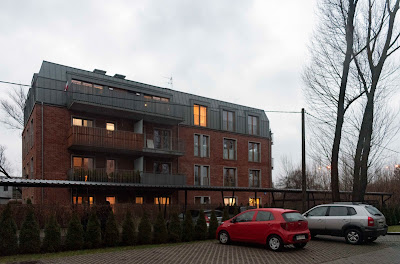
Warsaw's Christmas lights, 2017-18

This time 12 years:
Winter commuting in colour and black & white

This time 13 years ago:
Zamienie in winter


This time 14 years ago:
Really cold (-12C at night)

[last night's low: +5C]

Tuesday, 4 January 2022

Progress at Warsaw West station

Passing through W-wa Zachodnia (Warsaw West station) on my way to the office yesterday, I decided out of curiosity to jump off my train and have a look at how things were looking. The first of the three new long-distance platforms has been opened to passengers - and to trains. A reminder - this used to be Poland's worst railway station.

Below: there's to be a full-span footbridge as well as a tunnel said to measure 60m in width in which a new tram line will run.. From the footbridge there will be ramps and stairs down to platform level.
 

Platforms old and new: here's Platform 5, overshadowed by the roof of the new platforms (6 and 7)


Looking down on Platform 6, with both tracks open to passengers. Still a vast amount of work ahead of the builders, but much has been accomplished in a relatively (for the public sector) short time.


Below: looking across at Platforms 7 and 6. Right in the very distance (click to enlarge), there's a WKD [suburban] train standing at Platform 1.


The new footbridge connecting all eight platforms, the districts of Wola to the west and Ochota to the east curves away beyond the station. Reminds me a bit of the taxi ramp at Paddington station! This is the Wola side. No rails yet alongside Platform 7. Will the station be ready by the end of this year?


Below: the footbridge currently only extends as far as Platform 5. To the right, the train to Berlin, which was meant to have pulled onto Track 2, Platform 6; shortly before its arrival, an announcement came over the public address system in Polish, then English, that the train would be arriving at Track 4, Platform 5. At first, a small rush; most people just stayed on Platform 6. Then a stampede as the bulk of the Berlin-bound passengers caught wind of the change. The Berlin train waited until it was clear that everyone who needed to catch it was on board.


This might be an opportunity to re-number the platforms and tracks as normal (UK practice) - with each platform edge having its own platform number. The current numeration in Poland is crazy, and at stations such as W-wa Zachodnia or Poznań Główny or Lublin, the practice is infuriating to passing passengers. Reminder: it goes like this: 

Platform (Peron) 1 (WKD suburban trains only)
Track (Tor) 1, track 2

Platform 2
Track 20, track 22 (with me so far?)

Platform 3
Track 23, track 21

Platform 4
Track 8, track 25 (this is where it gets complicated)

Platform 5
Track 4, track 6

Platform 6
Track 1, track 2

Platform 7
Track 5, track 3 (Logical?)

And then there's Warsaw West's Platform 8, but that's in another place altogether.

This time three years ago:
From West London to South Warsaw

This time six years ago:
Anger and hate have no place in political discourse
[Blimey! How times have changed.]

This time eight years ago:
Is Conservatism rural or urban in nature?

This time nine years ago:
Poland's roads get slightly less deadly

This time ten years ago:
It's expensive being rich in Warsaw 

This time 12 years:
Winter commuting in colour and black & white

This time 13 years ago:
Zamienie in winter

This time 14 years ago:
Really cold (-12C at night)

Sunday, 2 January 2022

Grabów, Krasnowola and Jeziorki Północne

Not that often that I visit the north of my little manor - Jeziorki Północne north of ulica Sporna, up and over the S2 and into Grabów. Once I used to drive the children to school this way every morning. Many years ago. What was driven is now walked. So, join me for a stroll.

Below: the bottom end of ul. Kujawiaka, where it meets ul. Jeziorki. This muddy track, maybe three metres wide, is a proper Warsaw street; the sign informs taxi drivers where Zone 2 begins, the Warsaw equivalent of  "double-time on the metre, guv." What taxi driver would like to venture down here?


Ul. Kujawiaka was once called ul. Poloneza. Since the S2 cut a line across the Jeziorki-Grabów border, the lower part of it (1.5km) south of ul. Krasnowolska, has been renamed, up to and including the viaduct that crosses the S2 and the Metro's rail link to the outside world. From the narrow muddy path, above, to a four-lane road in a few hundred metres. The northern end, north of ul. Krasnowolska, retains the Poloneza name.

Below:
S2 heading east, photo taken from ul. Kujawiaka. Note the railway line to the right of the photo - this is the Metro rail link.


Below: 400m separates a muddy path to a four-lane viaduct - the same road. Ul. Kujawiaka, looking towards its northern end, where it joins ul. Krasnowolska.


Below: Krasnowola bus loop - end of the line, by a decorated wayside chapel. This is where the 239 terminates, a weekdays-only local line linking Grabów with the metro. The bus stop is numbered 51, the '5' prefix suggests a temporary location. When the 239 was inaugurated in January 2018, WTP stated that this would be the case, with the intention of finally locating a permanent bus loop some half a kilometre further west (ul. Tramblanki). With the S2 tunnel now open and the S7 extension nearing completion, perhaps WTP will get round to finalising this route...


Below: repurposed brick - ul. Poloneza, south of  ul. Krasnowolska. The building (also visible in the photo above) was built during WW2 by the German occupiers to house force labour. In the late 1990s/early years of this century, it was used as a dziupla ('hidey-hole') for car thieves, who'd bring stolen cars here to be dismantled for parts. Since then, it has been converted into trendy apartments!


Below:  the 160-year old Willa Krasnowola - I wrote about this crumbling ruin nearly 14 years ago (June 2008); it's still there - neither demolished, nor repurposed - just standin' over there, decaying.

Below: looking along the unelectrified coal-train line to Okęcie sidings. To the left, the lights of the S79 expressway, set low under the flightpath to Runway 33 of Warsaw Okęcie airport. The  twin-track electrified mainline is to the left of the entirely separate single-track coal-train line.


Below: the Metro rail link, looking towards the lights of Mordor (Służewiec Przemysłowy as was, now one of Warsaw's main office districts).


Below: the Metro rail link looking towards Ursynów and the curved bridge carrying it over the S2. From here, across ul. Puławska and into the Las Kabacki forest, the line runs parallel to the expressway.


Below: ul. Hołubcowa, south of the viaduct. Another one of Warsaw's roads that runs out of asphalt and carries on to its end in the form of a muddy track meandering through fields - a track capable of swallowing cars (even 4x4s) up to their axles in thick goo.


Below: ul. Sztajerki, caught in the crook of two expressways a main railway line and international airport. Otherwise, a quiet backwater of Warsaw, around 7 miles from the city centre. Like so many streets in Zielony Ursynów ('green Ursynów') west of ul. Puławska, from Poleczki in the north to Sarabandy in the south, are named after dances. A 'sztajerek' is a folk-dance related the Ländler, being a dance in 3/4 time once popular in Austria, Bavaria, German Switzerland, and Slovenia.


Left: looking towards the top end of ul. Kujawiaka. In the foreground a small pond - the land here is poorly drained. Although there's a fair amount of traffic turning onto Kujawiaka from ul. Ludwinowska, there's little traffic continuing along Ludwinowska heading for ul. Sztajerka. Note the luminous green orb by the tree in the foreground - an internal reflection within the lens of the streetlight diagonally opposite it in the frame.


Left: ul. Kujawiaka again, this time heading back down south towards ul. Jeziorki. An airliner is on final approach to touchdown at the airport.

Miserable but warm weather (10C) and cloudy; not the stuff of flashbacks, blue skies, sparkling snow and a crisp frost. A different atmosphere altogether. Maybe flashbacks for another time, and another place.


This time four years ago:
1929-1939; 2008-2018?

This time six years ago:
Track works between W-wa Okęcie and W-wa Dawidy

This time eight years ago:
The benefits of extending the human lifespan 

This time 11 years ago:
New Year's stocktaking

This time last 12 years ago:
A walk in the wild winter woods

This time 13 years ago:
Now that's what I call winter vol. 12

This time 14 years ago:
When the day starts getting longer


Saturday, 1 January 2022

Precognition - peering into 2022

Not your usual 'the world in the year to come' text, more a mystical contemplation of the future unknown. Czas jest umowny - 'time is something consensually agreed upon'. We commonly determine that our year - the point at which our planet starts its lap around the sun - begins around nine days after the Winter Solstice in the Northern Hemisphere, which as an astronomical turning point, would be more logical. We agree that the year starts on the first day of January, a month named after Janus, the two-faced Roman god of beginnings and transitions. Janus looks forwards and backward simultaneously; and so it is at this time of year that we tend to look back over the past 12 months and seek to ascertain what will happen over the next year.

As I wrote yesterday, I've been keeping a daily record of exercise and diet over the past eight years. Today, I copy-pasted the 2021 spreadsheet into the next series of columns, re-dated them and deleted last year's data, week by week, month by month, ready for this year's numbers to be entered. And as I did so, I felt I was peering into a framework, a scaffolding, for the future. Tuesday 22 February 2022; Wednesday 18 May; Monday 14 November 2022. What would each of these days bring? Will we reach Saturday 31 December without Mankind encountering any new woes? The Netflix film Don't Look Up seems to be on the button when it comes to summing up the zeitgeist of early 2022...

I have mentioned my father's seemingly irrational phobia (maybe too strong a word) for the number 22. We spoke on 21 May 2017; he told me of his deep anxiety connected with the following day. "The number 22 is a bad number," he said. And so it came to pass that on 22 May 2017, a 22 year-old Islamic fundamentalist suicide bomber at the Manchester Arena killed himself and 22 people. Did my father have a sense of foreboding, of precognition - of was it merely a case of superstition? Can the 22nd of February, 2022, pass without something awful occurring? [Twenty-two is an unusual number to have a fear of. So many people have an irrational fear of the number 13 that this has a name - triskaidekaphobia - and the number is routinely avoided by hoteliers and cruise-ship operators.]

I have posited that few people are gifted with genuine psychic powers, such as telepathy, psychokinesis, clairvoyance or indeed precognition. Such powers are almost impossible to pin down by way of scientific experiment - I believe that this is because these powers do not wish to be pinned down. Some people have strong powers, many more have weaker powers - too weak to even recognise. Most, however, have none at all or się nigdy nad tym nie zastanawiali - they have never considered or contemplated such a possibility, having grown up immersed in a rational materialist worldview that roundly rejects psychic phenomena as mere magical thinking - effect without cause.

I have to be very careful about the words I choose here. I will be trying to describe a phenomenon that I have alluded to on this blog several times, a phenomenon I've noticed since primary school. Namely my observation that misfortunes befall me unexpectedly. I feel that to a some extent I can ward off misfortunes happening by consciously precluding them. Complacency almost draws such incidents upon one - it didn't happen yesterday, so it won't happen today. Bayesian inference. 

A car crash. Losing your wallet and its contents. Or your phone. A flood, fire or burglary in your home while you're out. An angry altercation with family member, neighbour or workmate. Terrorism. War. We constantly teeter on the edge of chaos, and from time to time we slip - chaos, misfortune, happens. Is it purely random - or can we guard ourselves against it? 

I have to be careful so as not to appear boastful. "Nothing bad ever happens to me because I have these amazing powers" - pride comes before the fall. The hubris that so often meets James the Red Engine. Instant karma, just turn the page.

We can certainly take prevention seriously (mask-wearing and vaccination at a time of pandemic!), but beside practical risk assessment and mitigation practices, there's also a metaphysical aspect, I believe.

When contemplating luck, one should separate ego from consciousness. "I want to win millions on the lottery and have a big car and show off" - guess what - you won't.  Wealth and power are attributes of the ego; it would indeed spoil some vast, eternal plan if you were to become a rich man suddenly. But actively wishing for things such as peace, health, comfort, fulfilment - and consciously discounting their opposites - I believe is eminently achievable. In this lifetime.

And so, at the beginning of this year, let me wish all my readers contentment of the consciousness.

This time last year:
communication/This is the gift you must not lose

This time two years ago:
Wealth and inequality - an introduction

This time three years ago:
Gratitude for a peaceful 2018

This time four years ago:
Fighting laziness - a perennial resolution

This time five years ago:
A Year of Round Anniversaries

This time six years ago:
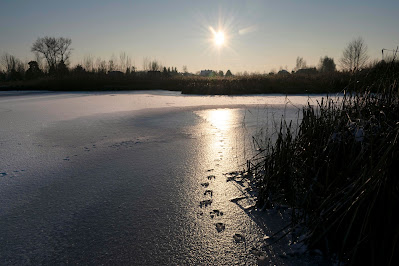
Walking on frozen water

This time seven years ago:
Fireworks herald 2015 in Jeziorki

This time eight years ago
Jeziorki welcomes 2014

This time nine years ago:
LOT's second Dreamliner over Jeziorki

This time 11 years ago:
New Year's coal train 

This time 13 years ago:
Welcome to 2009!

This time 14 years ago:
Happy 2008!

Friday, 31 December 2021

2021: A year in numbers

My eighth consecutive year in which I have recorded my health and fitness metrics daily. 'Beat last year' remains the motto and the ongoing target. The aim is the maintain optimal health and fitness as I slide slowly from middle age into ancienthood.

Some say it's a bit obsessive keeping a spreadsheet. I say it works.

So - a brief, hopefully not too boring, and maybe for some - instructive, overview of my year in numbers.

Walking - fifth year in a row where my daily average across the entire year has exceeded 11,000 paces. Moderate-to-high intensity walking has increased again, this time to 35 minutes a day. This means a maintained, uninterrupted 100 paces per minute.

Alcohol intake very near the UK Chief Medical Officer's guidelines of 14 units/week. In 2021, I drank half as much as I did in 2015. However, because I had more dry days than in 2020, on the days when I was actually imbibing, the input was higher (5.6 units per drinking day in 2021 compared to 5.2 units per drinking day in 2020). Target for 2022 will still be 14 units per week across the year - but with fewer dry days!

Twice as many 'lazy days' (no physical exercise) as last year! I attribute six of these to a strange period in mid-March where for a week I didn't have the energy or motivation to do a single press-up or sit-up. I am wondering whether that might have been a mild dose of Covid. Interestingly, I had three Pfizer jabs this year; none stopped me altogether from exercising, although the first one cut down the number of repetitions significantly. By the third I managed four lots of exercise including pull-ups, sit-ups, squats and plank.

The exercise routine is now more focused on health maintenance than physical strength. Key to this is the plank. Across this year, on average each day, I have held the plank for four minutes and 21 seconds, up ten seconds over last year. This works out at 26 and half hours over the whole year. 

Figures below are per day - for each and every one of the 366 days of 2020 (unless stated otherwise). Red number indicates last year's target not beaten.

Measurable and manageable
2015  2016 2017 2018 2019 2020 2021
Paces (daily
average)
10.7k 10.6k11.0k 11.4k 12.0k 11.1k 11.2k
Moderate to high 
intensity (mins)
N/A N/AN/A N/A 24 30 35
Alcohol drunk
(units/week)
28.0
25.020.819.7 18.515.514.1
Dry days over
course of year
123 155 186 196 198208231
Days with zero
physical training
266 1488327 17 11 22
Press-ups/day N/A N/A 25 60908320
Pull-ups/day N/A N/A 2 751112
Sit-ups/day 41 71 N/A N/AN/A1619
Sets of weights
exercises/day
N/A N/A2.12.2 2.3 2.4 1.1
Squats/day N/A N/AN/AN/A N/A N/A 28
Plank time (min:
sec/day average)
N/A N/AN/AN/A 3:40 4:11 4:21
Portions fresh
fruit & veg/day
4.3 5.0 5.2 5.35.46.16.4

Sit-ups are there to maintain spinal flexibility rather than as the primary stomach-muscle exercise. Again, higher quality repetitions - back fully flat on the floor, then twist so that right elbow meets left knee, then left elbow meets right knee. My record plank-holding time was 5 minutes and 16 seconds; more typically it's repetitions of one-and-half to two minutes held for two or three times. Weights - one set = 10 x lateral rises, 10 x interior rotations, 10 x exterior rotations, with 5kg dumbbells. These remain important as without them, my right rotator cuff aches a bit when sleeping on the right shoulder. Pull-ups - up until chin meets bar, from position where forearms are parallel with the floor. 

New this year: squats - from a standing position dropping down to sit on my heels, then bouncing back up. Introduced not only to strengthen thigh muscles, but to maintain good balance. In early days, I'd fall over more often than not. By December, up to 45 in one go.

Less alcohol, but more portions of fresh fruit and vegetables. Spinach, leeks, salads - and lots of cherry tomatoes. 

Fun Fact: since 1 January 2014, I have walked over 25,600km (15,900 miles).

Signing off for 2021, I'd urge all my readers to avoid complacency (subconsciously thinking "because last year/yesterday was good, next year/tomorrow will be good") and to be grateful for everything they have - mental health/state-of-mind, and physical health.

Blood pressure reading from half past eight this morning. Still optimal - 113/79 (average of three readings).

One interesting thing - I am laziest in summer. Any excuse to drop some exercises and take it easy. New Year's resolution - buy a pair of 5kg weights and a door-frame-mounted pull-up bar for the działka. I should recognise that in summertime, the living is easy, and I should let it go a bit - just a bit. Not as much as I did this year.

Above all - I give thanks, immense thanks, to the Good Lord for my health. Thank you God. May complacency never creep up upon me.

This time last year:

This time two years ago
2019 - a year in numbers

This time three years ago:
2018- a year in numbers

This time four years ago:
2017 - a year in numbers

This time five years ago:
2016 - a year in numbers

This time six years ago:
2015 - a year in numbers

This time seven years ago:
Economic forecasts for 2014 - and 2015?

This time eight years ago:
Economic predictions for 2014

This time nine years ago:
Economic predictions for 2013

This time 11 years ago:
Economic predictions for 2012

This time 12 years ago:
Classic cars, West Ealing

This time 11 years ago:
Jeziorki 2009, another view

This time 13 years ago:
Jeziorki 2008, another view

This time 14 years ago:
Final thoughts for 2007

Wednesday, 29 December 2021

S2 opens, unblocking east-west transit through Warsaw

I finally got round to it today - a very long (19,000 paces!) stroll from home to the western portal of the S2 tunnel, which was opened on Monday 20 December. 

Story so far - the A2 motorway/S2 expressway, which form the Polish part of European Route E30 (Cork to Omsk), got as far as Warsaw in 2012 (in time for that year's European football championships). Since then, transcontinental traffic heading east would get as far as this junction with ulica Puławska (below), and would then solidify into one huge constipated jam made up of local, regional, national and international traffic on Dolina Służewiecka. Now, over 11 years after the A2/S2 reached Warsaw, the route finally gets to cut through to the other side, via a 2.3km-long tunnel diving under the southern suburb of Ursynów. [The sign above the slip-road states that traffic over 16 tonnes is prohibited from using the S2 between 7-10am and 4-8pm. Much transit traffic will continue to use the DK50, but anyone who can will rather use the S2 - it's  27km shorter.]

For about two and half kilometres, the S2 runs parallel to a single-track railway line, the umbilical cord linking Warsaw's Metro system with the outside world. Rarely used these days (new Metro rolling stock now gets delivered by road!), the rails themselves are lightly coated with rust, suggesting the infrequent passage of a maintenance draisine. Below: looking west towards ul. Puławska, the slip-road joins the S2 to the right. The acoustic screens are effective - the roar of Puławska way behind me is louder than the traffic on the other side of the screen.


Below: looking towards the western portal of the tunnel. It dives down beneath the Metro, building the tunnel with minimal disruption to the Metro service was quite a feat of engineering! The sign says that average speed is being measured; cameras automatically capture each vehicle as it drives in and drives out of the tunnel and work out its average speed. You have been warned. 

Below: going underground. Above the tunnel, there has been much structural change to the fabric, the look-and-feel of Ursynów. I found it difficult to get my bearings along ul. Płaskowickiej, a street which I once knew intimately from morning runs to my children's primary school. 

I chose to return through the Las Kabacki forest. The Metro's rail link at this point, at twilight, takes on a very specific, eerie air. It is as if I have entered Tarkovsky's зона from Stalker by night...

Some subtle Photoshoppery going on here... That glow in the distance is from the Metro maintenance depot, but it feels like could be an atomic weapons manufacturing facility in the Urals...

On the way home I take the long way around to take a stroll over the ice on the pond on ul Pozytywki before it melts. The sign prohibits angling and littering, but there's plenty of evidence of ice-skating going on. Absolutely rock-solid ice - and you can see the high level of water in the pond this year. I like the horizon on this photo, the wires, lights and foggy sky.

Below: looking at ul. Pozytywki from the middle of the pond; a strong 1950s USA vibe. "Approaching the country club in midwinter."


I'd like to share two particularly atmospheric digital works from my brother; the one below is based on my recent photo of the new roundabout by the S7 extension viaduct - Cold fronts, Atlantic depressions and winter storms.


Below: the National Air Traffic Control radar installation, Claxby, Lincolnshire.


This time last year:
The first year of Covid-19

This time two years ago:
Last night in Ealing, twenty-teens
[A strangely prophetic post, suitably dream-like in quality]

This time three years ago:
The Day the World Didn't End
[The world's gone more shit-shaped than I dared predict]

This time six years ago:
Hybrid driving - the verdict

This time eight years ago:
Pitshanger Lane in the sun

This time 12 years ago:
Miserable, grey, wet London

This time 12 years ago:
Parrots in Ealing

This time 13 years ago:
Heathrow to Okęcie

Tuesday, 28 December 2021

The Person Who Contemplates Not.

One of those Polish words that doesn't click into place with a one-for-one translation into English is zastanawiać się. A reflexive verb in Polish, it translates (roughly) as 'to wonder (about)', 'to reflect (upon)', 'to think (of)', 'to ponder', 'to contemplate', 'to puzzle (over)' something. A Polish synonym would be skłaniać do refleksji, which Google Translate renders as 'to provoke reflection'

So. Człowiek, który nie zastanawia się is 'the person who doesn't wonder (about something); doesn't reflect (on something); doesn't contemplate (something). The English equivalents are non-reflexive. But then an English reflexive verb denotes that the subject and object are the same person ('I wash myself'). Note too:  Stanowić (without any prefix) means 'to constitute' or 'to determine'. Ustanowić means to establish, to enact, to legislate, to appoint. Postanowić means 'to decide'

This, by way of introduction to a thought I jotted down a while ago:

The person who contemplates not? The non-pondering person? What is it that they do not ponder? Well - everything and anything - contemplation is not their thing; it's not what they do. Reflection - self-reflection; "I just get on with it. If I spent all my time contemplating, I'd never get anything done". "You never achieve anything by philosophising about life, the Universe, everything." "I consider myself to be a practical person, not a theorist".

The self-described 'practical person' rarely has time for consideration of the great questions of existence - why are we here, what's the point of it all, why is there something rather than nothing. By not contemplating such existential issues, all that's left with is matter. Materialism. Ownership and status. What I have is who I am [relative to others] - a vain existence devoid of the rich inner world of the observant and curious person whose mind is restless in its zastanowienie

Contemplation, over time, honing one's own worldview in light of experience and argument, does lead to a greater peace of mind, a happier and more joyous life. But is this a matter of choice or birth? Nature or nurture?

The feeling of being grateful is essential to living the contemplative life. Whatever you have - spiritual ease, peace of mind, health - be grateful for it and don't lapse into complacency. 

This time three years ago:
2018 - a year in journeys

This time nine years ago:
Wise words about motoring

This time ten years ago:
Hurry up and wait with WizzAir at Luton

Monday, 27 December 2021

Wintery Gorgeousness Tinged with Filth

When the temperature falls below -10C, the main task of the power grid is to keep homes warm. Overnight low was -13C, warming to -11C at 11:00 this morning. Below: out on the ice, ul. Dumki.

The ponds have frozen over again; a short thaw turned the surface to slush, which over the past three nights has solidified utterly. No worries about traversing this ice sheet.

Below: despite the day's beauty, the air quality is execrable. To the left a panorama of Warsaw taken on Christmas Day (-4C); not the best visibility in any case (compare the acuity of the foreground with the horizon). But just look at the picture on the right - taken today.  Varso tower, the tallest in Warsaw (and indeed the EU) is just about visible in the right-hand photo.

The filth belching out of homes (typically older, single-family houses), car exhaust pipes do the damage. Warsaw's coal-fired power stations don't contribute much to the smog, but lots of carbon dioxide. Below: Siekierki power station; with all the sliders maxed out on Photoshop to extract the image of the chimneys out of the smog.

And still they come: another full train-load of coal on its way from the Silesian coalfields hauled by a pair of Newag Dragon 2 locos on the electrified mainline. Trains are typically 40 wagons long, each one capable of carrying 60 tonnes of coal. This train is heading toward Okęcie sidings, from where a diesel loco will take the wagons to the power station back down along the parallel, non-electrified, track swinging off to Siekierki beyond Nowa Iwiczna station. The chimneys of the power station are visible on the horizon, as is a band of filthy air.


Below: a Soviet-built M62 diesel loco with a full rake of coal wagons heading to Siekierki. Photo taken from the other side of the tracks to the photo above with a much wider-angle lens.

Back towards the warmth of home - two hours outside at minus 10C holds no terrors if you're warmly dressed. Below: birch trees along ul. Dumki.


This time last year:
Jakubowizna - moonrise kingdom

This time four years ago:

This time seven years ago:
Derbyshire in the snow

This time eight years ago:
Is Britain over-golfed?

This time ten years:
Everybody's out on the road today

This time 11 years ago:
50% off and nothing to pay till June 2016