Showing posts with label ul. Katarynki. Show all posts

Monday, 1 June 2020

I'm from the south - the south of Warsaw

The southernmost street in Jeziorki, ulica Katarynki (lit. 'Barrel-Organ Street'). On the corner a house with a tall hedge outside. That dark shape you see on the hedge is the opening in which is the gate to the house - it reminds me of the Great Hedge of India! On examination, it turns out that there's one street in Warsaw that extends even further south than ul. Katarynki, and that's ul. Prawdziwka (lit. 'Boletus Street'), to the south-east of Las Kabacki forest.


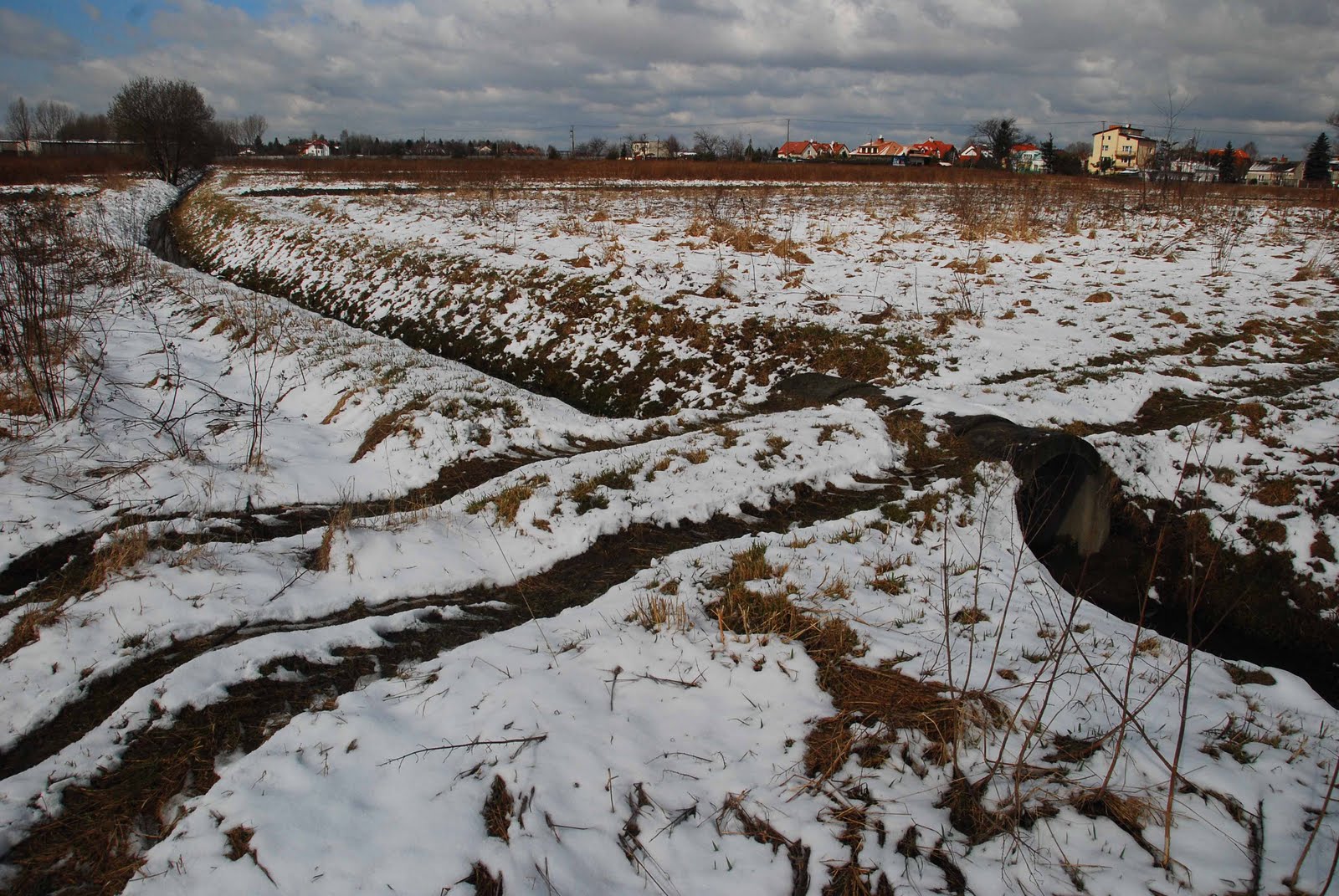
Fields run south from ul. Katarynki to the border, marked with a long, straight drainage ditch running east-west. The rooftops on the horizon are in Mysiadło (which is not Warsaw).


Below: looking west along ul. Katarynki. As rural a scene as one can imagine in Poland, with a cart-track running between fields; we are still actually within Warsaw's boundaries.

Below: looking east towards the last houses on ul. Katarynki. Note the proliferation of solar panels - a subject I intend to return to.


Below: drainage ditch running between ul. Katarynki (to the right) and ul. Żmijewska (to the left). Neither street has asphalt, both end up in a dead end surrounded by fields. On the horizon to the left, three large piles of builder's sand, stored by Falbruk, a road-building and repair company headquartered on ul. Karczunkowska.


Left: another pile of construction material, across the tracks on the S7 construction site. Rendered in black and white, this heap of soil  gives the impression of a high mountain somewhere in the Rockies. Note the waxing gibbous moon up top and vapour trail.

Scramble up to the top of the hill  for some good views. Below: looking west towards Jeziorki and the railway line, between W-wa Dawidy station to the left and W-wa Jeziorki station to the right. Beyond, on the horizon, the Las Kabacki forest. Zielony (Green) Ursynów at its greenest.


I turn 90 degrees to the left for an even more stunning than ever panorama of central Warsaw, getting better as the hill I photograph from rises ever higher. Work on the S7 is progressing at a rapid pace.


Below: the sun has set over the horizon, its afterglow still visible, reflected from the pond and from the clouds. The Sublime Aesthetic; the sensual and the spiritual, merging.


This time last year:

Saturday, 25 May 2013

Rainy night in Jeziorki tests new retention ponds

"It rained and it rained/Both night and day" [John Lee Hooker, Tupelo]. Not a biblical downpour that would have had Noah reaching for his hammer, but steady, uninterrupted, heavy rain that lasted over 16 hours. Yesterday evening, rain water was rising up the drive, by this morning the front garden was inundated.


The amount of water that fell on our property was similar to that experienced in the Corpus Christi storm of 3 June 2010. This was no cloudburst, no thunder or lightning, no tempestuous winds, just hour upon hour of heavy rain - the equivalent, we were warned, of a month's rainfall in a single day.

Yet another anomalous weather event; a good opportunity to see how the new retention ponds have fared. Their task - to prevent flooding of local houses, roads and fields. I set off by bike to inspect the neighbourhood and how it's been affected by the rains.


Above and below: certainly looking around the nearby fields, there's been a good deal of podtopienie (localised flooding). Many of the fields around ul. Trombity have had their level raised by humus dredged from the bottom of the pond. It seems not to have done the trick.


Below: the road itself is relatively dry; there's no long stretch of submerged asphalt as there was in June 2010, nor are the spur roads (ul. Dumki and Trombity 24) too badly affected.


Below: the same spot, 4 June 2010 - a massive difference; here the renovated retention ponds have proved their worth.

Below: at the end of ul. Trombity, looking along the drainage ditch running parallel to ul. Kórnicka; brim-full of rainwater. The bottom end of the field immediately behind me (between Trombity and the railway line) is flooded, as usual. The new retention ponds have done little or nothing to protect the most vulnerable fields; my advice would be to dig more drainage ditches and make existing ones wider and deeper.


A similar story by the retention ponds along ul. Pozytywki (below). The fields are flooded, the road is dry...


...and the retention pond has swallowed the rainwater, its banks are dry and secure. Note the turf that has been planted at the water's edge. Starting to look quite attractive around here!


Below: Wąsal pond, between Pozytywki, Katarynki and Czarkowskiego. Again, it's been edged with new turf, and as we can see, it's nowhere near full. [Panoramic photo - two pics merged into one.]


Below: most important proof that the renovated ponds are working (at least as far as protecting roads and buildings - as we can see fields are still liable to flooding). Looking north along ul. Puławska, towards the junction with Karczunkowska. Three years ago, that security guard box in the foreground had floated off into floodwater, and Puławska was a river from one side to the other.


Below: ul. Puławska on the morning of 4 June 2010...


In terms of preventing this kind of catastrophe, the newly-renovated ponds have done their job well. Let's just hope they will not be put to a greater test by anomalous weather events in future. However, better drainage of fields into the ponds would do our local farmers a great favour. Despite the millions of zlotys that have been spent on flood prevention in Jeziorki, the lower-lying fields remain vulnerable.

This time last year:
Wide-angle under Pl. Wilsona

This time two years ago:
Ranking a better life

This time three years ago:
Questions about our biology and spirituality

This time four years ago:
Paysages de Varsovie

This time five years ago:
Spring walk, twilight time

Thursday, 2 May 2013

Pozytywki ponds after the refurbishment

A first post-winter look at the newly-deepened flood retention ponds along ul. Pozytywki. Below: a panoramic shot of the pond on the corner of Pozytywki, Katarynki and Czarkowskiego. This is Jezioro Wąsal; surrounding trees and shrubs have been cut down, the banks re-profiled and a new sluice gate fitted (foreground). At present it looks bare and uninviting; no doubt it will regain some of its semi-rustic charm when grass grows back on the banks. At the far end, a newly-deepened and widened channel linking this pond to the one further up Pozytywki (bottom picture).


Left: Wąsal looking west from ul. Czarkowskiego. The houses fronting onto ul. Pozytywki ('Music-Box Street') have had little wooden platforms built out overlooking the pond. I wonder whether this has been done as part of the refurbishment, or whether the home-owners took the initiative to construct them. It's quarter past seven in the evening, this, the southernmost extreme of Warsaw is silent and still, with just some light traffic noise coming from Puławska behind me.

Incidentally, ul. Katarynki means 'Barrel-Organ Street' or 'Hurdy-Gurdy Street'. From here, right up to ul. Poleczki six kilometres north, most streets that have appeared after 1951 when the area became part of Warsaw, have musically-themed names, with folk instruments and folk dances predominating.


Above: Jezioro Pozytywki, on ul. Pozytywki. Here, the loss of trees is more apparent; the pond has lost much of its charm. [Click on the relevant labels below to see how the area looked before it was revitalised.] Grass will return, but it was all the surrounding greenery that gave the area its now lost appeal. But it's still a pleasant area for an evening's stroll.

This time last year:
May Day in the heat [31C!]

This time two years ago:
Bike ride across rural Poland

This time six years ago:
Mazovian landmark from the air

Saturday, 26 March 2011

Winter's slight return II

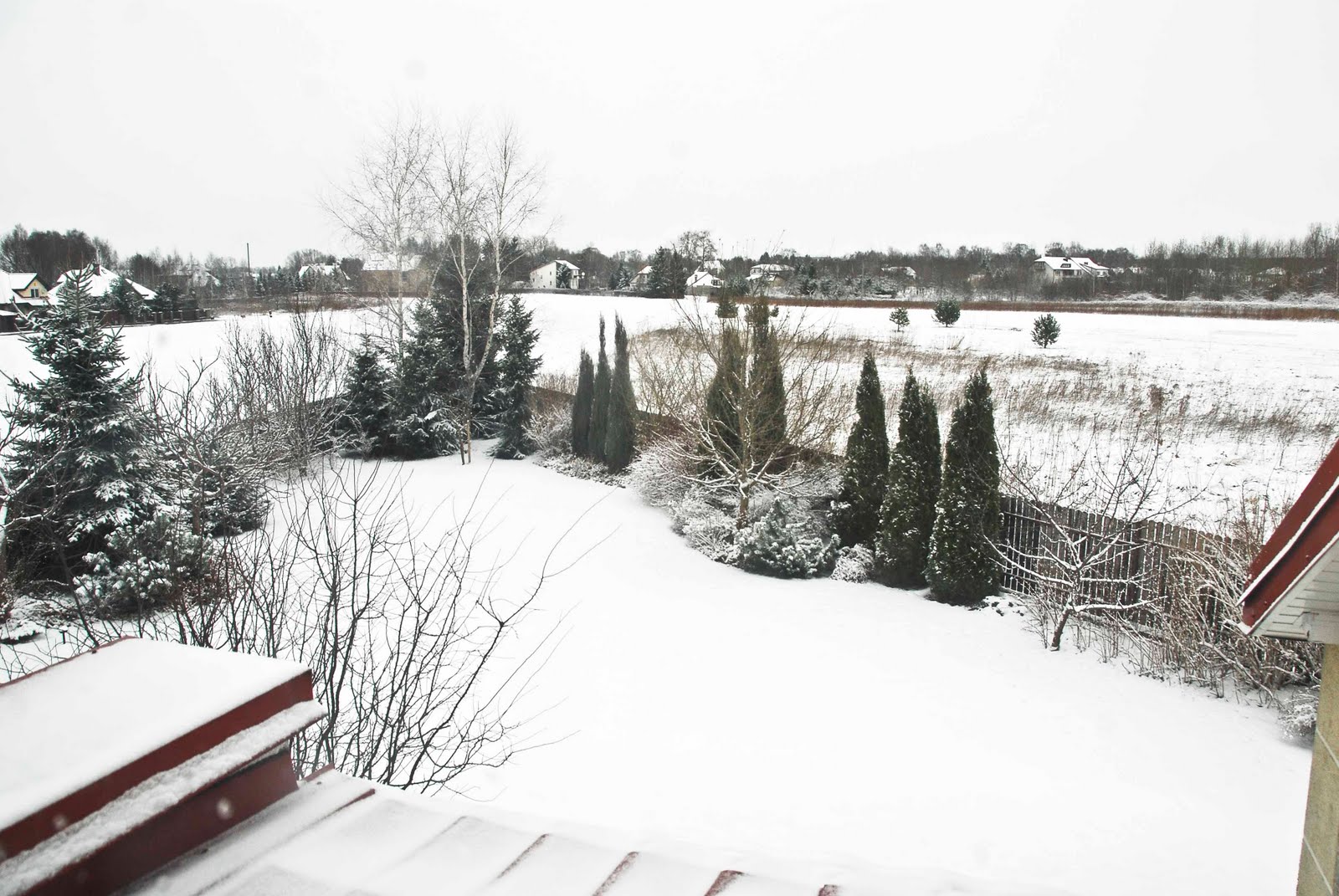
The surprise hit me not when I opened my curtains this morning but rather yesterday morning when I checked the 48-hour weather forecast on new.meteo.pl (the UM model). It suggested that snow would fall overnight. Which indeed it did. Last night, when I was picking Moni up from the Metro station around 11pm, the car thermometer read +7C. Then just after midnight, in the space of just 20 minutes, the temperature plunged by four degrees. And soon after it started snowing.

So new.meteo.pl gets it right again. I can recommend this service as being very accurate, although the 84-hour COAMPS model forecast also found on new.meteo.pl is not so good.

The overnight snow is rapidly disappearing from the lawn as I write these words and I'd be reasonably sure that this is the last snow of this winter. So time to take the camera and set off for a walk around the snow-covered fields for what could be the last time for eight or nine months.

Above: the pond on the corner of ul. Katarynki and ul. Pozytywki (barrel-organ and music box streets respectively). According to Google Maps, this small piece of water is called 'Jezioro Wąsal'.

Above: snow covers mud on the fields between ul. Żmijewska and ul. Karczunkowska. No ice on the water in the drainage ditch.

Above: looking towards ul. Karczunkowska, in the distance the blue roofs of our neighbours' houses across the way on ul. Trombity.

This time two years ago:
Winter in spring: last of the snow?
This time three years ago:

Saturday, 19 May 2007

The year's most beautiful day?

18th/19th century English naturalist, Thomas Bewick, claimed after many years of observation, that May 18 was the most beautiful day of the year in England. His day may well be correct for Poland too. After the cold snap that happens around St. Sophia's Day (15 May), the weather usually improves. Yesterday was fine - today perfect. Everything is in leaf, the greenery of nature fresh, unburnt by the sun, yet it's warm enough to be T-shirt weather.

Today's walk took me to the southern fringes of Jeziorki, to Warsaw's boundaries with Mysiadlo. Below is the pond on ul. Pozytywki, where I saw a grey heron as well as the usual ducks and black-headed gulls.

Further on, across the fields south of ul. Katarynki, I could see the derelict buildings of the old state collective tomato farm in Mysiadlo (below), which will soon be developed into new homes. The size of the development (80 or so hectares, I estimate) means several hundred more cars joining the morning and evening rush-hours in and out of Warsaw.