Showing posts with label Warsaw architecture. Show all posts

Thursday, 8 February 2024

Rainy Night in Warsaw

Awful weather; cold rain and wind. Heavy rain. My walk from the office to Varso tower runs mostly underground; through Metro Centrum's passages, along the platforms of W-wa Śródmieście and W-wa Centralna, I avoid a total soaking.

Below: tipping it down, evening rush hour, looking north up Aleja Jana Pawła II. On the left, the base of Varso tower, across the street in the distance, the skyline is dominated by Rondo ONZ One; Złoty Tarasy shopping centre and the Lumen building to the right across the flyover. And I remember Warsaw without any of these landmarks from not that long ago!

Left: still looking north along Al. JPII as it snakes its way through central Warsaw, this time from the 42nd floor of Varso tower. That low cloud is passing rapidly across the city, blown south by a cold, wind.

Below: homeward bound after the event, the rain has passed. Looking north along ulica Towarowa; W-wa Główna station to the left, Warsaw Hub tower, with the Skyliner just behind it, and across the road, Warsaw Unit tower. That giant Warta sign is visible from Chynów station, on Kilometre 43 of the Warsaw-Radom line.

Below: the same cluster of buildings, through the trees and across the tracks. In the foreground, an east-bound suburban train approaches W-wa Ochota station, W-wa Główna terminus stands behind it, the beyond it, Skyliner, Warsaw Hub and Warsaw Unit.

Below: the Mercedes-Benz building on Aleje Jerozolimskie. Outside of working hours, the area around this building is dead. I suggest turning part of it into a Museum of Motoring, open at the weekend.


Below: back in Jakubowizna, the cloud bank overhead caught my eye. It passed; a short period of sunshine before the next load of clouds arrived.


This time three years ago
Saturday on the działka

This time four years ago:
The Ilyushin Il-12 'restaurant' disappears from outside my office

This time five years ago:
Walker's London

This time seven years ago:
Deconstructing political graffiti – London and Warsaw 

This time nine years ago:
Europe's peripheral woes

This time ten years ago:
Winter returns to Warsaw

This time 11 years ago:
Babcia vs. Roma action, Centrum 

This time 12 years ago:
Reasons to be cheerful

This time 13 years ago:
Skiing in the Beskid Wyspowy

This time 14 years ago:
What's to be done about Warsaw's unmade roads?

This time 15 years ago:
Jeziorki in the fog

Friday, 12 January 2024

Warsaw railway interstitials

There's the place you live. Then there's your workplace. And then there are the so-called 'third spaces' – public places where you can meet and mingle - cafés, parks, squares, bars, etc. And between these three typologies, we have the interstitial spaces, the liminal places, through which you merely pass through (unless you happen to work there), leaving only your shadow.

There's a specific atmosphere that I've always felt about Warsaw's two city-centre railway stations – Warszawa Śródmieście, for suburban trains, and Warszawa Centralna, for long-distance trains. (Warszawa Centralna also known as Dworzec Centralny, and in English, Warsaw Central.)  A sense of unease, mystery, disquiet. The two are linked by a system of tunnels which goes on beyond Centralna to the light-rail terminus, Warszawa Śródmieście WKD.

I've written and photographed these interstitial places before, but this week I have passed through this way three times, and so they are worth a revisit with a blog post. When it's cold and slippery at street level, underground it's warmer and dry. It's possible to walk half a mile along the platforms and appreciate the unique atmosphere offered by these interstitial spaces. Passengers tend to cluster around the middle of the platforms, but the far ends see little human activity.

Below: although no Radom-line trains currently call at W-Śródmieście station, I walk this underground way between Metro Centrum and W-wa Centralna. Although it's just gone 9am and the rush hour is tailing off, the station is almost empty.

Below: the stairs leading up to street level. At the top - ulica Emilii Plater that separates the suburban and the inter-city stations, but we'll be crossing underneath instead.


Below: stairs from the underground passage leading up to platform level, W-wa Śródmieście. At the top – ticket machines, green to the left for Koleje Mazowieckie, yellow to the right for Warsaw urban transport. What could lurk behind those store-cupboard doors in the foreground?


Below: the tunnel connecting the four platforms of Warszawa Central and W-wa Śródmieście. The light temperature from the neon tubes is unnatural, casting a chill uncertainty upon the scene. Modern signage at least provides some reassurance that all is not lost. Unmarked doorways in the passage add to the sense of unease.


Below: eye-level with the platform floor, W-wa Centralna. In the distance, an east-bound Pendolino train awaits departure from Track 3 Platform 2. I've written before about rail infrastructure operator PKP PLK's obstinacy in platform numeration. Here at Centralna it's not too bad, but in Poznań I've missed trains because I'm looking for Track 5 Platform 2 rather than Track 2 Platform 5, a long way off. A mention is needed of architect Arseniusz Romanowicz, who designed the station in 1975, along with most of the stations along the transversal line, from Warsaw East to Warsaw West and all points in between.


Below: from the top of these stairs, take a nose around into the tunnel. The long-distance lines run east from here, merging from eight tracks down to two before emerging at the top of the Warsaw escarpment by W-wa Powiśle station (which InterCity trains bypass). This is the Tunel średnicowy (transversal tunnel), a place with its own mystery – the urban legend of a secret spur between this tunnel and the basement levels of the Palace of Culture, just to the north of the line. 


Below: another urban legend - the ramp that led down to what was a secret underground kebab factory. Or storage room. There's a ramp like this at the eastern ends of Platforms 1 and 2 and at the western ends of Platforms 3 and 4. What goes on down below these days remains shrouded in mystery.


Below: now approaching half past nine in the morning; the distant lights of a Dart train that's soon to depart for Wrocław. Note how empty the far end of the platform is, and how far to the middle section of the station where the trains stop.


Below: view from the western end of Platform 3; in the distance, daylight, and the single platform of Warszawa Śródmieście WKD station.


Up some more stairs, into another passage, round the corner and down a ramp – and you arrive at W-wa Śródmieście WKD (below). Normally, the terminus station of Warszawskie Koleje Dojazdowe, a light railway separate from the PKP network that extends south-west to Grodzisk Mazowiecki. Normally, because services currently terminate two stops back at W-wa Reduta Ordona – or they would if the railway's workers weren't out on strike.


And finally, looking back at the deserted platform from the stairs at the far end. From here to the eastern exit of W-wa Śródmieście PKP suburban station is over one kilometre of walkways, tunnels, stairs and escalators beneath street level (though here, daylight peeps through).


An interesting alternative to Warsaw's city streets.


This time two years ago:
Qualia memories - snowy Greenwich, January 1970

This time three years ago:
Meagre, disappointing snow

This time four years ago:
The Inequality Paradox - a summing up

This time five years ago:
Familiarity, tradition and identity

This time six years ago:
Black hat merry-go-round 

This time seven years ago:
Skarzysko-Kamienna and Starachowice, by train

This time eight years ago:
The world mourns the loss of David Bowie

This time ten years ago:
Where's the snow?

This time 12 years ago:
Two drink-free days a week, British MPs urge

This time 13 years ago:
Depopulating Polish cities?

This time 14 years ago:
Powiśle on a winter's morning

This time 15 years ago:
Sunny, snowy Jeziorki

Monday, 23 October 2023

An autumn day in Warsaw

To town to moderate a panel discussion about packaging waste at the British Embassy, so off the beaten track (with the current rail diversions, Warsaw's new embassy district is even harder to reach by public transport than usual). Train to W-wa Służewiec, tram to Metro Wierzbno, Metro to Politechnika, and then a pleasant walk from there. 

I notice that the old Hungarian trade office on ulica Szwoleżerów 10 has been fenced off. Fearing it may under threat of demolition, I walked around the perimeter and saw a notice saying that it is about to be modernised. Great - it's a wonderful piece of post-war Modernism and deserves a second life. Poking my lens through a gap in the fence, I snap the building. At the moment, it wouldn't look out of place in the Chernobyl exclusion zone.

Built in the early 1970s, the building functioned as a showcase for Hungarian products (which I suspect were in as short supply on the Polish market in communist times as they were back home). It fulfilled this role until 2012, when it was closed. It was listed in 2016, preventing it from being demolished - a likely fate given the number of embassies that have sprung up in close proximity to this building. The British, Indian, Japanese, Spanish, South Korean and Netherlands embassies are all clustered around here, and were all built in the 21st century.

The walk back from the British Embassy to catch a tram back to W-wa Służewiec took me up ul. Agrykola, a lovely car-free thoroughfare running down the Vistula escarpment, with the Łazienki Palace park to the left.


Below: a favourite prospect of central Warsaw, from Aleja Niepodległości as it crosses ul. Wawelska.


Public transport functioning flawlessly - my tram (visible in the photo above), gets me to W-wa Służewiec in good time to catch the Radomiak fast train to Chynów - the journey from takes all of 22 minutes!

This time last year:
The end of the apple harvest
[Still going strong this year!]

This time two years ago:
Ignoring the UFO phenomenon?

This time three years ago:

This time four years ago:
Poznań by night

This time six years ago:
West of Warsaw's central axis

This time ten years ago:
Plac Unii shopping centre opens

This time 12 years ago:
Visceral and Permanent, Part II 

This time 13 years ago:
Autumn colours, locally

This time 14 years ago:
Edinburgh


Saturday, 10 December 2022

City centre notes

Most of my life has been spent living in the suburbs - 36 years in the West London suburb of the Borough of Ealing; four years in the suburbs of Coventry (including two on the campus of Warwick University) and 25 in the Warsaw district of Ursynów - it's 'green' parts - Pyry and Jeziorki. And of those years, 37 have been spent living in detached houses. No one living on the other side of my four walls. The past few years have seen me spending more and more time in the countryside, which I am coming to prefer over suburbia. I used to think suburbia was the best place to live; today - I'm not so sure, as housing density and traffic increases.

The past four days I have been cat-sitting at Moni's flat just off Warsaw's New Town (Nowe Miasto) - that's 'new' as opposed to Warsaw's Old Town - 15th century rather than 13th (rebuilt after the war). Below: looking at ulica Freta from the New Town market square, rush hour.

This is an entirely new experience to me - staying for more than a single hotel-night in a city centre -  being in my daughter's flat, with kitchen, pet, routine, office work online - and city-centre life. Strange.

Left: just 400m from Moni's front door, the Barbakan marks the border between the New Town (ahead) and the Old Town (behind). Built in 1540 and rebuilt after WW2. Fewer tourists penetrate the New Town, preferring the more commercialised Old Town, its market square and the castle square. Those that make it beyond the Barbakan tend to be more curious and less prone to boozy excesses.

So it's quiet - but not silent. On the działka, the only things that make any noise are the fridge and my bedroom radiator as they cool and warm; other than that, there are no 'bumps in the night'. In the flat, however, I have the impression of being in a hotel or student halls of residence - beyond these four walls, there are people - things going on. 

Through my sleep, I dimly hear somebody's alarm clock going off. People are walking up and down the stairs. Someone's hoovering - where? there's a flat upstairs, downstairs, to the left and to the right right. Little boxes all around. People separated from me not me hundreds of metres, but by the thickness of a wall.

The flats are are of various sizes (Moni's is very small - one room, tiny kitchen, tiny bathroom), the building's just four floors high - so no lift. But for one person - entirely adequate, cheap to heat and light.

In the country, I can go for a 90-minute walk and literally not encounter any other human being during that time. I can revel in the solitude, the peace, the luxury of uninterrupted trains of thought.

But here, I am a stone's throw from a UNESCO World Heritage Site. My evening strolls - either through dark, cobbled backstreets that could be from an Expressionist film-set, or else along brightly lit, car-free thoroughfares decorated for Xmas and full of tourists and revellers - are quite magical. A different magic to that of silent misty forests and orchards in the encroaching dusk. 


Neither forms of magic are on offer in suburbia, all rushing cars, muddy puddles where pavements should be.

Living so close to a street full of excellent restaurants, cafes and bars, living one minute rather than 30 minutes walk from the nearest grocery shop, a Carrefour Express, however, is costly. The temptation to live it up is great. Crisps and a beer? Don't mind if I do. Good bottle of wine?

After a few days' city-centre living, I must say I can see the appeal. Massively. A great counter-balance to rural life, but so much better than suburban life which has little of the civilisation of the city, and little of the comforting calm of the countryside. Suburbia is not what it was.

This time two years ago:
First snow for ages!

This time three years ago:

This time four years ago:
Consciousness, memory and spirit of place

This time five years ago:
Polish Perivale

This time six years ago:
Power in the vertical

This time ten years ago:
And still they come [anomalous flashbacks that is]

This time 11 years ago:
Classic glass

This time 12 years ago:
What's the Polish for 'pattern'?

This time 14 years ago:
"Rorate caeli de super nubes pluant justum..."

Wednesday, 22 June 2022

Warsaw: midsummer's day, midsummer's night

Midsummer's Day - the middle of summer, or the astronomical start of summer? A busy day in town today, to the office, a conference call, a trade workshop, an economic conference and a business mixer. On my way from the workshop to the conference, I walked along ulica Prosta, popping through the completed Norblin complex (which I last visited before work here started in earnest). Below: looking towards Norblin from the plaza outside the mBank building.


Below: walking along Pasaż Ludwika Norblina. Quiet for the time of day. But it's so nice - a blend of old brick and modern architecture.


Below: looking back at the mBank building along Pasaż Ludwika Norblina. A stone's throw from where my father lived as a small child.


I wrote recently about pre-war German ghost signs in Silesia, here's a sign from Poland's more recent Stalinist past - a health and safety slogan from the early '50s by the look of the typeface that was uncovered during the reconstruction and preserved. 'On each job, take care not only of your own safety, but also equally of your work comrades.'

Below: from the 32nd floor of the Warsaw Unit, looking east along ul. Prosta (lit. 'Straight Street'); the mBank building to the left, the narrow black building is Skysawa tower; beyond that the (shorter) Central Point that sprang out of the ground outside my office during the pandemic; to its right, Rondo ONZ tower, further right is the Intercontinental Hotel. The Palace of Culture is hidden from this view.


Below: looking at the same skyline from street level. Plenty of cyclists and e-scooterists using the cycle path. Build it, they will come.


Below: plac Grzybowski, standing there a vintage Jelcz 043 coach.


I reach the Bristol hotel to see to my delight a whole lot of classic cars (including three Jaguar XK140s, three E-Types, two '65 Ford Mustangs) outside - participants in the Imperial Rally, from Oslo to Lisbon.


Below: looking north along Krakowskie Przedmieście towards the Bristol hotel. Tourist season hasn't yet begun in earnest.


Below: waiting for the train home, W-wa Zachodnia station. This view will soon be history, as work will soon start on the modernisation of the suburban platforms.


Below: the new long-distance platforms as seen from an old suburban platform. Note the difference in lighting. Sunset (the year's latest - 21:01 in Warsaw today) leaving light in the sky nearly an hour and half later.


This time two years ago:
Rural rights of way

This time three years ago:
Not a whole lot going on...

This time seven years ago:
Dreamtime supernatural

This time nine years ago:
Baszta - local legend round these parts

This time 11 years ago:
Downhill all the way to December

This time 12 years ago:
What do I want for Poland

This time 13 years ago:
Summer holiday starts drizzly

This time 14 years ago:
Israeli Air Force Boeing 707 visits Okęcie

Tuesday, 6 April 2021

Jabbed!

Well, I got my first dose of the Pfizer today, and I must say everything went unbelievably smoothly - an experience at odds with every previous encounter with the Polish state health service! I turned up about 12 minutes early, waited a bit, filled in two forms ("have you had/have you got"/"no, no, no, no"), had my blood oxygen taken (98%), then went in to have the jab - which I literally did not feel ("Have you done it yet?" I asked after the doctor swabbed the area.) And - the best bit - I have an appointment for the second jab on 11 May. Before the doctor had even looked up from her laptop, I got a SMS from the system with news of the second appointment on my phone. And - another good bit - seven hours afterwards, I can honestly say I feel no side effects. But I expect a sore arm in the morning after sleeping half the night on it.

Meanwhile, my first journey into Warsaw on public transport since 1 October - and so much change! W-wa Główna station has finally opened (though the footbridge at the western end of the platforms is still not ready); W-wa Zachodnia (below) is deep in the early stages of its latest remont, with some of the long-distance platforms partially demolished already. You can see where the new footbridge is going to go - the pillars are going up. This will replace the tunnel that currently connects the platforms.


Left: this is Central Point, a hole in the ground a year ago as the lockdown began. It is right outside my office (which I have not been to now in over six months) - but as we've moved from the 9th floor to the 4th, I'm no longer expecting any views. In London, I used to work in Centre Point (also on the 9th floor), but Centre Point has 34 floors, Central Point a mere 21, the same height as the four tower blocks on the Ściana Wschodnia.

Right: I can see it from Jeziorki - now, officially the tallest building in the EU, taller than Stalin's Palace of Culture, taller than London's Shard - Varso tower tops out, the mast now up on its roof. It now dominates Warsaw's skyline, the first - I hope - of many skyscrapers that one day will surround the Palace of Culture, rendering it invisible from the distance. From Jeziorki, I see the other (southern-facing) side of the tower. From here (ulica Emilii Plater), I can see how much there's still to finish. To the right - Daniel Libeskind's Żagiel building.

Below: another skyscraper that's popped up since lockdown - Skysawa tower, at 155m not even high enough to get into Warsaw's Ten Tallest. For a long time, a hole in the ground - then suddenly whoomph! and there it is.

Postscript I - I can now feel an odd sensation - my left (jabbed) arm feels like I've overdone the pull-ups and the weights - usually when I get this, it's in both arms!

Postscript II - 48 hours later the dull ache is easing, taking another day off the exercises and walking to be on the safe side.

Postscript III - Neighbours had the AstraZeneca jab yesterday - today, they are reporting fever, shivers and muscle pain.

This time last year:

This time two years ago:
Działka update 

This time three years ago:
Łódź is a film set

This time four years ago
Contemplative imagery, Ealing and Warsaw

This time nine years ago:
Baffled: my first visit to Jeziorki's Lidl 

This time ten years ago:
In vino veritas?

This time 11 two years ago:
Are we getting more intelligent?

This time 12 three years ago:
Lenten recipe: tuna, chickpea and pesto salad

This time 13 years ago:
Coal train sidings, Konstancin-Jeziorna

This time 14 years ago:
Jeziorki from the air

Sunday, 29 November 2020

Tall and awesome

On my walk yesterday, I looked towards the city centre from Dawidy and was stunned to see a blazing tower on the horizon. So I scrambled up onto the railway embankment to get a better look - my God! My first reaction was that this is something akin to the Grenfell Towers tragedy in London in June 2017, when 72 people died. I whipped out my 70-300mm lens and zoomed in - no smoke above it, no smoke - no fire. So what was it?

A live railway line is not the place for pondering such questions. I did so at home, posting the photo on Skyscraper City, the very best resource for anything to do with Poland's built environment. 

[It's a global site, but Poland has one of the most active Skyscraper City communities in the world, with more posts and page views than Albania, Armenia, Azerbaijan, Belarus, Belgium, Bosnia-Herzegovina, Czechia, Denmark, Estonia, Finland, France, Georgia, Greece, Hungary, Ireland, Latvia, Lithuania, North Macedonia, Norway, Slovakia, Slovenia, Sweden, Switzerland and the UK all put together!]

Within minutes, I had my answer - that 'flaming tower' is the Warsaw Spire. Yes indeed. Such was the angle of the sun that the south-west facing glass reflected it so awesomely. It was quite a sunset, too... (turn through 180 degrees...) On the horizon, the Raszyn radio mast (a misnomer, as it's in Łazy, 9km from Raszyn. When completed in 1962, it was the second-tallest structure in the world and the tallest in Europe. And 93m miles beyond, the sun. Shining onto Warsaw's Spire.


Left: my father and my son in front of the Spire, 31 July 2019. The Spire has two curved glass 'walls', and between them a vertical row of windows - and it was these that reflected that sunset yesterday. 

One Skyscraper City commentator remarked that the Spire from this angle looks like a frankfurter between two hot-dog buns; another commentator reminded us of the time that sunlight reflecting off the mirrored roof above the entrance was strong enough to set fire to two motorcycles parked outside. 

Today's walk took place on a heavily overcast day, but at least it didn't rain - or as had been forecast - it didn't snow. A standard 10,000 paces to Nowa Iwiczna and back, and on the way, a snap of the electricity pylons marching through Zgorzała and Nowa Wola on their way to Piaseczno and Konstancin. These are high-tension M52 pylons (!) carrying 220kV cables all the way from the coal-fired Kozienice power station. Standard height, 40m.


One development worthy of note - ulica Gogolińska, which runs parallel to the railway line on the west side, is currently asphalted only as far as Warsaw's border, from there on it's a muddy dirt track that serves the housing estates like the ones above. Today I saw evidence that asphalt is currently being extended southwards towards Nowa Iwiczna. Good news for local residents!

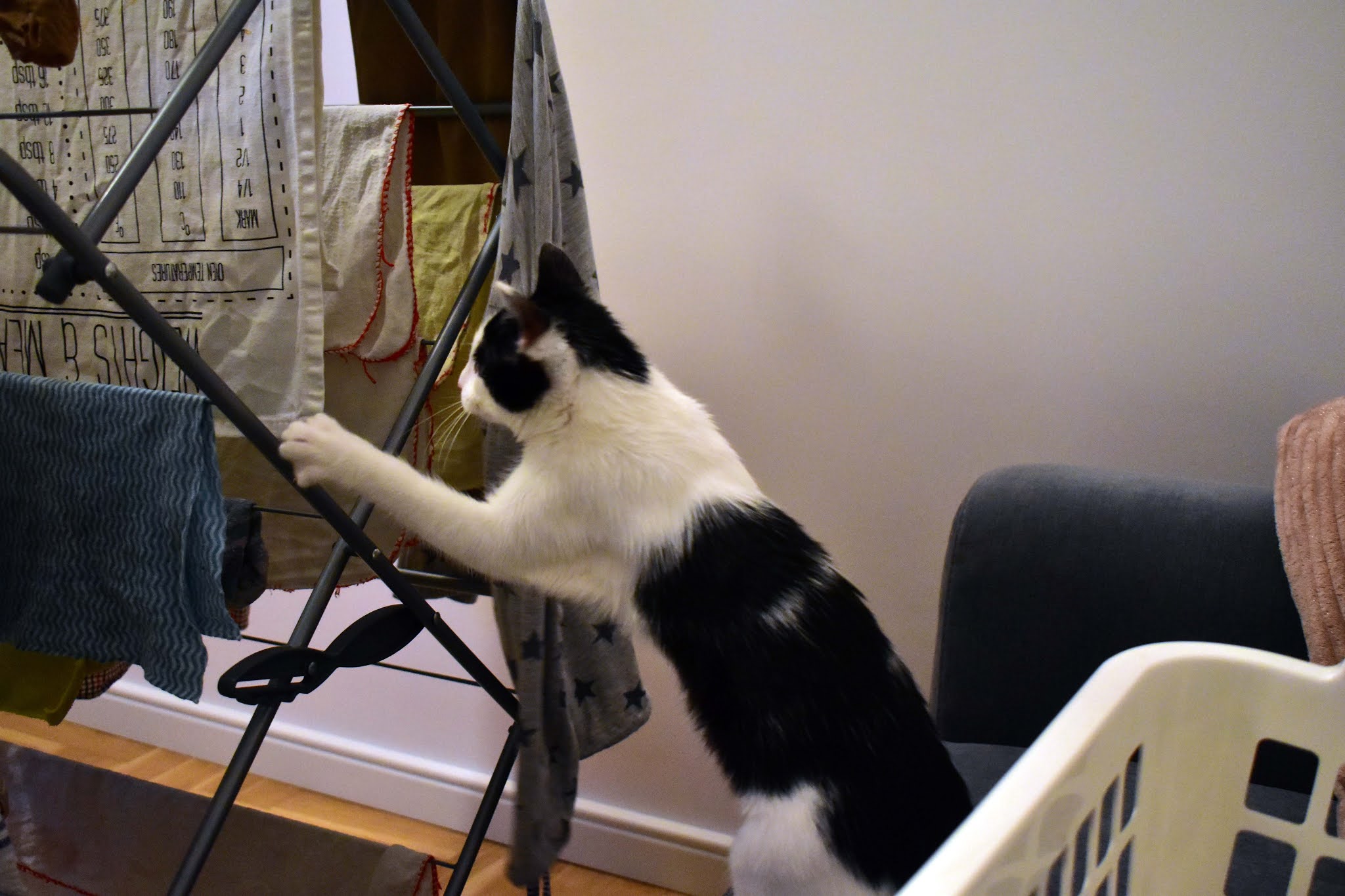
Bonus picture: domesticated cat helps out around the house.


This time five years ago:

This time seven years ago:
Crumbling King Coal, Katowice

This time eight years ago:
Street cries of Old Poland

This time nine years ago:
The gorgeousness of Warsaw at dusk

This time ten years ago:
I'm so glad I'm living in Warsaw

This time 11 years ago:
Candid photography

This time 12 years ago:
Archival photos of Jeziorki's Rampa in action

This time 13 years ago:
Red sky in the morning...


Wednesday, 16 September 2020

Hot in the city

Wednesday 16 September. Temperature at 16:30: 29C. Hot in the city. A day spent discussing the state of Poland's real estate and construction sector, and seeing it (in Warsaw at least) how it is, six months after the start of lockdown.

Below: I step out of W-wa Śródmieście station and onto ulica Emilii Plater, on my way to Q22. In the foreground, Daniel Liebeskind's Żagiel, Złota 44, to its right, the Intercontinental Hotel.


Below: on its way up, 38 stories and 155m tall when finished, Skysawa (how does one pronounce that? Skajsawa or Skysower?) is starting to emerge from ul. Świętokrzyska at the Rondo ONZ end. To the right, in the background, Spektrum tower.


Below: it's five to nine, I'm just about to enter Q22. I'm moderating our Real Estate & Construction Breakfast - for the first time in 14 years of doing them - as a webinar. Before the pandemic, at this time of day, the pavement is packed.


Below: view looking south from the 32nd floor of Q22. In the centre of frame, Varso tower, now overtaking Rondo ONZ 1, and when completed, Warsaw's - and the EU's - highest building.


Below: view looking west from the 32nd floor of Q22. In the centre of frame, Warsaw Spire. To the left of it, the cluster of office buildings around Rondo Daszyńskiego, with the Skyliner tower (190m) the tallest of them.


Below: back in the office for the first time in two weeks, and a quick peek to see how Central Point is doing. Not even at the halfway stage - but as lockdown got started, it was still a hole in the ground.


Below: Finished! Widok tower, and in front of it, the redesigned PKO Rotunda building.


Every building will be completed; unlike the crash of 2007-08, when construction came to a standstill, it hardly missed a beat this time round. But developers are not starting new projects. Everyone is waiting; maybe two years - to see the future of office work. What will be the balance between WFH (working from home) and coming into city-centre offices to meet colleagues? Once the pandemic eases (no sign yet!) the corporate world will eventually settle on an optimal, blended, hybrid model. But exactly how many desks will be needed remains to be seen - and this will determine the future growth of cities. The choice has always been between Upward and Outward. My guess is the latter. Unfortunately - sprawl will result.

This time last year:

This time three years ago:
Polish employers' demographic challenge

This time seven years ago:
The rich, the poor, the entrepreneur

This time eight years ago:
Food: where's the best place to shop in Poland? 

This time nine years ago:
Bittersweet

This time ten years ago:
Commuting made easy

This time 11 years ago:
Work starts on the S79/S2 'Elka'

This time 12 years ago:
Warsaw's accident-filled streets