Showing posts with label skyline. Show all posts

Saturday, 3 May 2025

In town and around

Below: tram stop outside Rondo ONZ 1 tower. Modern public transport serving modern offices. A safe, clean, modern, reasonably priced city. Though peeking into an estate agent's window, I'm shocked at what's happened to house prices over the past ten years. From 2002 to 2014, hardly any movement, then a London-style explosion.

Below: Rondo ONZ 1 tower from across the road. All this was brand new not so very long ago; today the centre of gravity of Warsaw's business district is shifting westward towards Wola.

Below: one of my favourite thoroughfares in Warsaw, just around the corner from my office, ul. Świętokrzyska. Across the road from the Palace of Culture. And here's one my favourite shops in Warsaw, Voltarex, a shop selling high-end kitchen equipment. I pop in to buy a stainless-steel vegetable steamer insert for my pan; from now on, steamed broccoli, steamed asparagus, steamed runner beans, healthier and tastier than boiled veg. It's the end of April, and the restaurants have their pavement tables out, creating a wonderfully Mediterranean atmosphere. The long weekend is just beginning...

Below: ulica Grzybowska as it intersects aleja Jana Pawła II, shortly after sunset. The old 1990s Atrium International plaza has been demolished; the crane stands where the 34-story Upper One building will shortly emerge. My father spent his earliest years around here; on his last visit to Warsaw in 2019, he was delighted by how modern Warsaw has emerged from the rubble of Nazi occupation.


Warsaw might have moved forward dramatically, but here and there are signs of past ways of thinking. This one, for example, by a block of flats off Grzybowska, reeking linguistically of Tsarist-communist bureaucratic formalism. "Forbids one from leaving uncleanlinesses by the chute, key to the abovementioned space finds itself in the porter's kiosk". Note use of the agentless passive.

Below: back home in Jakubowizna, flags are out for 3 May, Poland's national day, remembering the world's second (after the USA) and Europe's first written constitution (1791).


Below: shimmering in a heat haze, Warsaw's skyline as seen from ul. Kinetyczna ('Kinetic Street'), on the south side of Warsaw airport.


Below: out by Warsaw Okęcie airport –a US Army Beechcraft C-12F Huron shortly after take off. (This is the basic transport aircraft, rather than the RC-12 Guardrail signals intelligence platform, which I see from time to time on FlightRadar24.com flying around the Baltic.)


Below: a Gulfstream G600 business jet belonging to the Bank of Utah (!) taking off from Okęcie.


Below: SP-LIM, a LOT Polish Airlines Embraer EJ170 in retro livery, passing the radio tower at the airport's edge....


...and this time in focus... 'Flying you since 1929'. 


This time three years ago:
Return to the Konstancin-Jeziorna sidings

This time six years ago:
A review of the second part of Hillier's Betjeman biog.

This time seven years ago:
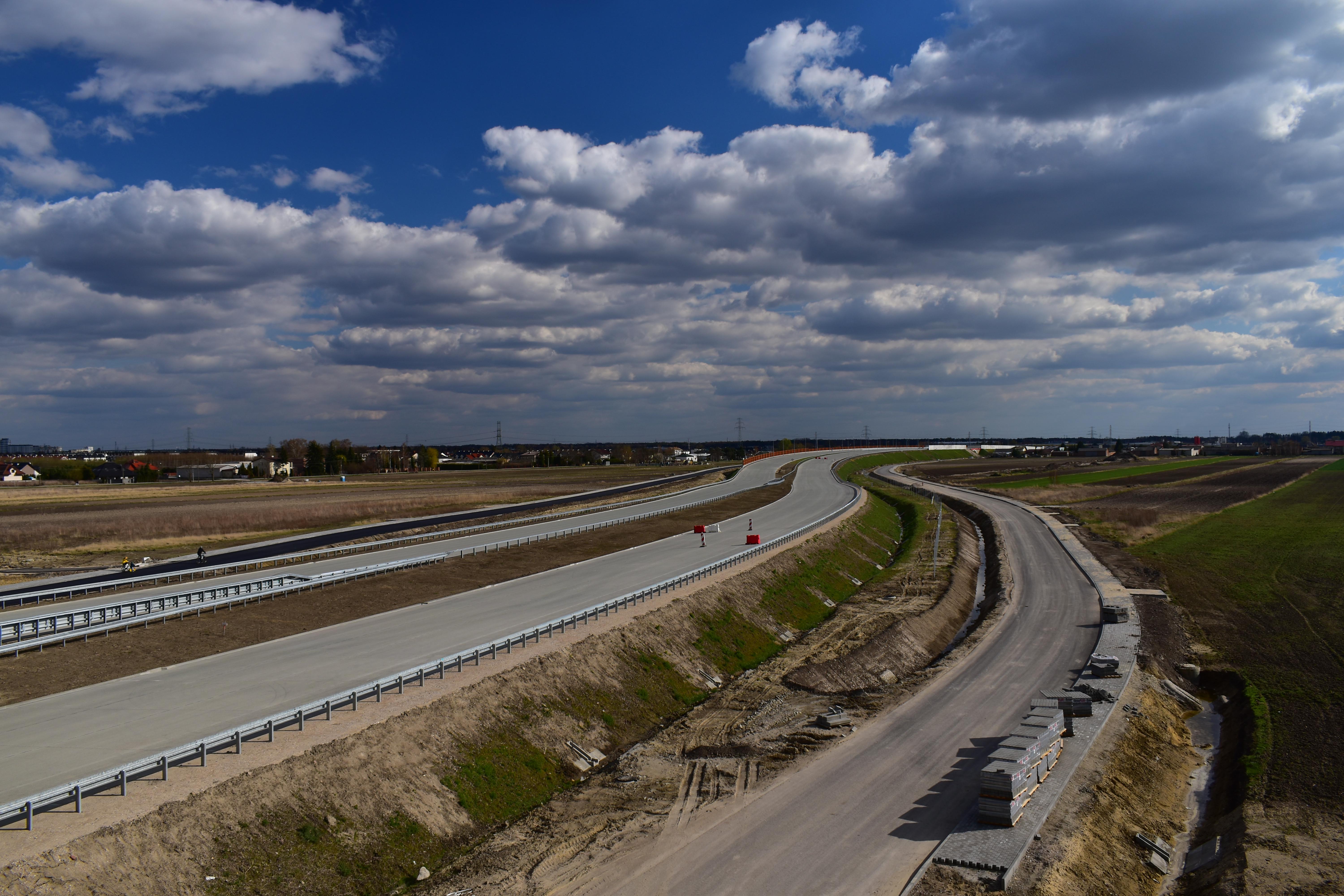
New roads and rails

This time eight years ago:
The Gold Train shoot - lessons learned

This time 11 years ago:
Digbeth, Birmingham 5

This time 12 years ago:
Still months away from the opening of the S2/S79 

This time 13 years ago: 
Looking at progress along the S79  

This time 14 years ago:
Snow on 3 May

This time 15 years ago:
Two Polands

This time 16 years ago:
A delightful weekend in the country

This time 17 years ago:
The dismantling of the Rampa

This time 16 years ago:
Flag day

Friday, 24 January 2025

Warsaw city centre, dusk to darkness

To town for the leaving-do of a colleague (always a sad occasion when a excellent, competent and all-round nice person moves on) a beautiful cloudless sky brings on that 'crushed-velvet dusk in the city of my dreams' vibe again. Warsaw's city centre has developed fantastically over the past three decades, its skyline once dominated by Stalin's Palace of Culture slowly becoming crowded out by new skyscrapers. Little by little, Warsaw's central business district is shifting westward, its epicentre no longer focused around the axis of ulica Marszałkowska. Rondo ONZ ('United Nations Roundabout') and aleja Jana Pawła II now constitute the eastern edge of the CBD, and it's around here that I strolled yesterday evening.

Below: Rondo ONZ, an entrance to the Line 2 Metro station in the foreground. Note cycle path snaking round it. Two pizza delivery guys are setting off with their orders. To the left, the Ilmet building, completed in 1997, destined to be pulled down and replaced by a taller building in 2011, and still standing. The giant rotating Mercedes-Benz logo on the roof was taken down in 2021 (a shame!); demolition was postponed because of one thing after another, but as you can see, there are no longer any tenants in the building (no lights on) and new plans to dismantle it and build something new in its place were announced in 2023. Plans for building a 188m-tall skyscraper, Warsaw One, have been announced by developer Skanska, with construction due to start in 2026, which suggests that the Ilmet building will finally be torn down sometime this year.


Left: Rondo ONZ One stands on the south-east corner of the roundabout. It is 159m high (plus mast), so when built, Warsaw One across the road on the south-western corner will look down upon it. My favourite Warsaw skyscraper, its appearance in 2006 contributed hugely to cementing Warsaw's image as a modern city of business. As well as the metro station, Rondo ONZ is also well served by trams running up and down al. Jana Pawła II and (after modernisation) west along ul. Prosta. And Warsaw Central railway station is a mere seven-minute walk away.

Below: looking west along ul. Twarda ('Hard Street'); in the foreground, the Cosmopolitan tower, behind it, Spektrum tower. At the base of the former, a fine cafe called SAM where we had the leaving do. Spektrum tower boasts that it has "the highest-situated concert hall in the world" on its 28th floor, though this is contentious.


Below: Plac Grzybowski, looking west. Cosmopolitan tower in the centre, to the right, the Q22 tower, to the left Rondo ONZ One, and to its left, Warsaw Financial Center. 


Below: pl. Grzybowski looking southwest. In the foreground, the Church of All Saints (where, in 1923, my father was baptised); behind it from the left – the Intercontinental Hotel, the antenna topping Varso tower, Warsaw Financial Center and Rondo ONZ One. And shining brightly in the sky, Venus, the evening star (after whom my kitten is named).


After some decent food (and three glasses of surprisingly excellent Pinot Noir!), it's time to say farewell and set off to Młynów and thence to Chynów, accompanied by the strains of Yours Sinsoully in West Wilts Radio (for my weekly dose of finest soul and R&B). And there's a hungry kitten to feed!

Night falls. Below: a view of Warsaw largely unchanged since the 1970s, though with more (and bigger) cars. A reminder of the time when the Palace of Culture, seen here flanked by postwar apartment blocks, was the only tall building in Warsaw.


Below: and back to where I started – Rondo ONZ for the metro back to Młynów. Looking west towards the Warsaw's newest skyscrapers that stand around Rondo Daszyńskiego. The skyline will be filled out by the five towers currently under construction for the Towarowa 22 complex.


Warsaw is developing beautifully; a dynamic business hub, integrated into the European and global economies, with an excellent culinary and cultural infrastructure. May its growth be sustainable.

This time nine years ago:
Searching for growth

This time 12 years ago:
The more it snows - a decent snowfall in Warsaw

This time 13 years ago:
A Dream Too Far - short story

This time 14 years ago:
Compositions in white, blue and gold

This time 15 years ago:
Dobra and the road

This time 16 years ago:
Polish air force plane full of VIPs crashes on landing in bad weather

Thursday, 8 February 2024

Rainy Night in Warsaw

Awful weather; cold rain and wind. Heavy rain. My walk from the office to Varso tower runs mostly underground; through Metro Centrum's passages, along the platforms of W-wa Śródmieście and W-wa Centralna, I avoid a total soaking.

Below: tipping it down, evening rush hour, looking north up Aleja Jana Pawła II. On the left, the base of Varso tower, across the street in the distance, the skyline is dominated by Rondo ONZ One; Złoty Tarasy shopping centre and the Lumen building to the right across the flyover. And I remember Warsaw without any of these landmarks from not that long ago!

Left: still looking north along Al. JPII as it snakes its way through central Warsaw, this time from the 42nd floor of Varso tower. That low cloud is passing rapidly across the city, blown south by a cold, wind.

Below: homeward bound after the event, the rain has passed. Looking north along ulica Towarowa; W-wa Główna station to the left, Warsaw Hub tower, with the Skyliner just behind it, and across the road, Warsaw Unit tower. That giant Warta sign is visible from Chynów station, on Kilometre 43 of the Warsaw-Radom line.

Below: the same cluster of buildings, through the trees and across the tracks. In the foreground, an east-bound suburban train approaches W-wa Ochota station, W-wa Główna terminus stands behind it, the beyond it, Skyliner, Warsaw Hub and Warsaw Unit.

Below: the Mercedes-Benz building on Aleje Jerozolimskie. Outside of working hours, the area around this building is dead. I suggest turning part of it into a Museum of Motoring, open at the weekend.


Below: back in Jakubowizna, the cloud bank overhead caught my eye. It passed; a short period of sunshine before the next load of clouds arrived.


This time three years ago
Saturday on the działka

This time four years ago:
The Ilyushin Il-12 'restaurant' disappears from outside my office

This time five years ago:
Walker's London

This time seven years ago:
Deconstructing political graffiti – London and Warsaw 

This time nine years ago:
Europe's peripheral woes

This time ten years ago:
Winter returns to Warsaw

This time 11 years ago:
Babcia vs. Roma action, Centrum 

This time 12 years ago:
Reasons to be cheerful

This time 13 years ago:
Skiing in the Beskid Wyspowy

This time 14 years ago:
What's to be done about Warsaw's unmade roads?

This time 15 years ago:
Jeziorki in the fog

Tuesday, 16 May 2023

Opening to up a new western Warsaw

Looking at Warsaw's skyline from the south over the past 25 years, it's visible that the city's central business district is shifting westwards. The big new towers are all west of the Palace of Culture, and more are rising. 

The closure of the transversal railway line to trains coming up from Radom and their diversion northward around the west of the city centre gives me a new perspective on the Warsaw district of Wola. If, like me, you can't tell ulica Wolska from ul. Kasprzaka, knowing only that they are a pair of parallel thoroughfares running west out of the city centre, this is a good opportunity to learn more.

Today I had a meeting in the Warsaw Hub, the big new office located on Rondo Daszyńkiego, the new centre of gravity for offices. Normally, I'd have taken the train to W-wa Ochota and walked north from there. Now, I took the train to W-wa Wola and walked east from there. 

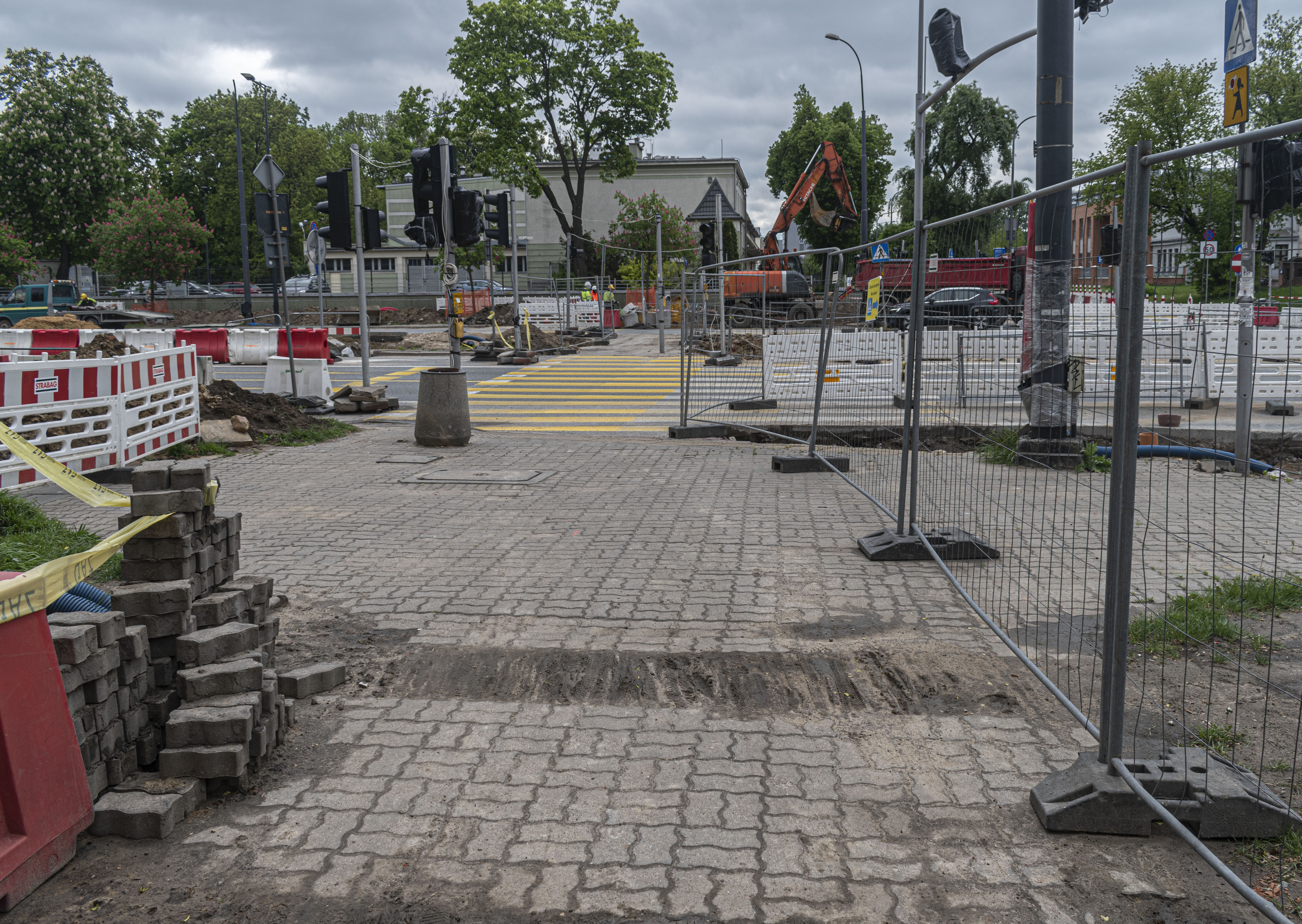
Now, W-wa Wola used to be called W-wa Kasprzaka, being renamed in 2018 when the old W-wa Wola became W-wa Zachodnia Peron 8 (now W-wa Zachodnia Peron 9). The roads and pavements around the station and the junction with Aleja Prymasa Tysiąclecia are currently one great hole in the ground as the new tram line here is extended westwards. Result: an obstacle course for pedestrians, a major inconvenience for drivers.

Between Rondo Tybetu (naming this roundabout after Tibet had the Chinese Embassy in Warsaw hopping mad!) and Rondo Daszyńskiego is a stretch of road that was once home to light industry (a radio factory, a pharmaceutical plant), but this part of of Wola, Czyste, now is experiencing rapid change.

Below: typical architecture for the area, a communist take on Mid-Century Modern, the building of the Institute of Chemistry. I stand here puzzled by the 'H' in 'ICHF' and 'ICHO' until I realise that it's 'CH' as in Chemia. (Instytut Chemii Fizycznej/Instytut Chemii Organicznej. PAN = Polska Akademia Nauk - Polish Academy of Sciences) Note the PRL-era paving slabs. 


Left: Marcin Kasprzak. He was a communist - so he was bad. But he was Polish - so he was good. But he shot dead four policemen - so he was bad. But they were Russian - so he was good. But he worked with Rosa Luxemburg - so he was bad. But he was backed by Józef Piłsudski - so he was good. 

On balance, the long street named after him didn't get a new patron after 1989, unlike streets named after other communist organisers (Marceli Nowotko, Julian Marchlewski). And the statue remains.

What's more - there's another monument to Kasprzak on ul. Kasprzaka (below) - standing where stood his house, from where he set out to kill the Russian policemen. It was erected in his memory in 1950, on the 45th anniversary of his being strung up by the Tsarist occupant.


Left: you will have noticed the pink votive candle at the foot of the monument; people still come to pay their respect to the Firebrand of the Proletariat. Lying on the other side of the cyclepath, a zebra crossing was painted to its surface to ensure the mourners' safety in reaching the monument. Wonder what Kasprzak would have made of the Polish HQ of a French bank in the environs of his former family home...?


Below: the clump of buildings around Rondo Daszyńskiego, the face of the new Warsaw. Two buildings still going up, the heart of the financial district. In the foreground, the tram line swings round towards the camera, away from the line of ul. Kasprzaka, taking trams north up ul. Skierniewicka towards ul. Wolska, where they turn left and continue westwards towards Bemowo and Boernerowo. Once complete, they'll run straight through.


Below: completely at odds with its new neighbours, the old Polfa Warszawa plant is due to be sold, knocked down and redeveloped - as a complex of apartment buildings.


Left: Layer upon layer of Warsaw, from old brick to the futurist glass construction of the Spire, with all points in between. This is still a common sight in Warsaw, but in coming years old brick from before 1939 will either be knocked down or restored to its former glory, and most buildings built between 1945 and 2000 will eventually be torn down and the sites redeveloped

Below: Rondo Dash in all its new-found glory, and more new buildings to come on either side of the roundabout. In the centre, the Skyliner building and Towarowa towers rising to its right. In the background, the Warsaw Hub tower...


Below: looking west from the  26th floor of the Warsaw Hub. Now - you can't see the Palace of Culture from here, it's hidden behind Złota 44 ('Żagiel'), to its right, Varso tower now dominates the skyline. In the foreground, the vast building site that will become the Towarowa 22 mixed-use development with a series of 'stepped' skyscrapers here, each one taller than its neighbour, rising to the tallest one at 150m.


This time five years ago:
The Order of Time by Carlo Rovelli - review

Sunday, 9 April 2023

Easter and photo catch-up time - Pt 1: Urban

Normal blogging resumes from today; there will be more localist photography and fewer spiritual and philosophical musings. For the time being anyway...

On 21 March, I had the chance to visit the Varso tower for the first time - the EU's tallest building, opened late last year. Below: Warsaw skyline looking west from Warszawa Śródmieście. Skyscrapers from the left: LIM tower, Central tower, Varso Place (centre), the Lumen building by Złote Tarasy, and Złota 44 ('Żagiel', or the Sail).

From the 43rd floor, the views, shortly after nightfall, were spectacular. Impressive city, Warsaw - what you are gazing down upon was nothing but rubble 78 years ago. Below: looking north, along ulica Towarowa/ul. Okopowa.


Below: looking north-east towards aleja Jana Pawła II.


Left: looking down on the Palace of Culture, with Złote Tarasy in the foreground. A long-held dream of mine. My dream was to be able to do this from 360 degrees - Stalin's gift to the people of Warsaw ringed by supertall skyscrapers, each one higher than it, rendering it invisible when looking at the Warsaw skyline from a distance. 

This might never happen - the shift to remote work, resulting from Covid and IT, means that corporates need less floor-space for their offices, and so the rush to build supertalls has slowed right down.

Below: once a familiar sight in railway stations and airports around the world, the flip-over destination indicator board has almost completely been replaced by LCDs. Warsaw's Śródmieście station still has some; they will not be around very long. Known across former communist Europe as the Pragotron (after the city of Prague, where the company that manufactured them, Elektročas, was based). Working off punch-cards, the mechanical complexity of these devices (and lack of spares) means their days are coming to an end. The flik-flik-flik-flik sound of the destinations flipping over as a train departs will soon be history. Make sure you take a conscious note of it before it goes.

Earlier in the month, I got out of Warsaw on two business trips. 

Below: leaving Szczecin station at daybreak, having come up on the night train.


Below: the rising sun colours the distant waters of the River Oder. To the left, the tower of the Pomeranian Medical University.


Left: the same tower, this time in the late afternoon. Szczecin will never allow the visitor to forget its Germanic history - the architecture is so characteristic.

Below: the Urząd Morski (maritime office) building, the neo-gothic former Neues Rathaus (new town hall), opened in 1879. Burnt just after the second world war by Soviet soldiers, it was rebuilt in the 1960s, and renovated in 2008-15. The strong sunlight brings out the colour of the brickwork.


Below: Szczecin's main post office, built around the same time as the Rathaus, and in the same materials, but still serving its original purpose. Renovated in 1995.


On 9 March I had a meeting with the Wałbrzych Special Economic Zone at the Lower Silesian Science and Innovation Park. I travelled to Wrocław by night train, arriving shortly after 5am. A leisurely breakfast in the (mercifully!) open Scottish restaurant, where meat-free food was on the menu, and at 6am I set off on foot for to my destination - 8.2km from the railway station. It rained all the way. By the time I arrived, nearly two hours later, I was soaked through. Still, I did my paces for the day. Below: Much of the route was like this.


Passing the war memorial honouring soldiers of the Polish Army, 1939-45 (erected in 1979), I decided to walk to the top. Until I looked down upon the individual graves, I thought it was going to be a Soviet memorial - that communist aesthetic pervading, the sculpture looking to my contemporary eyes in the wet morning like nothing more than a pile of body-bags stacked high. Somehow it failed to arouse any meaningful emotion in me.


Below: looking down from the summit at the Park+Ride by the Oporów tram loop. The hill was a popular destination for joggers and Nordic walkers. Just 20 cars parked (it's around 7am).


The Wałbrzych SEZ event was very interesting, focused on HR, and attracting HR directors from across Lower Silesia. I returned to Warsaw by car, as one of two passengers (three or more people in a fossil-fuel-powered car = same carbon footprint as doing the same journey individually by train). My longest car journey of the year so far.

Back to Warsaw, the train to town takes a different route; all trains from the Radom line are diverted to Warszawa Gdańska via the mis-named W-wa Zachodnia Peron 9. Below: my train is about to cross over the brand-new bridge that carries traffic over onto the Warsaw bypass route (via W-wa Wola). The old route - the tracks leading into the centre of the photo - was far more convenient for me, but awaits modernisation.


Tomorrow's photo catch-up will be rural in character.


This time three years ago:
A myriad paths to God

This time four years ago:
No God for those who don't believe, a God for those that do

This time five years ago:
Work proceeding around Jeziorki

This time six years ago:
Karczunkowska reopens to traffic

This time ten years ago:
Goodness gracious!

This time 11 years ago:

This time 11 years ago:
Cycling and recycling

This time 12 years ago:
Winter clings on to the forest

This time 13 years ago:
Toyota launches the iQ

This time 15 years ago:
Old school Łódź

Sunday, 17 April 2022

Horizons

Good photography weather - brisk wind moves scattered clouds across the sky, dappling the landscape with patches of sun that will either illuminate the foreground or the horizon, or neither, or both, the sky itself capable of turning in some drama. Photos from three recent walks, all three being at least 16,000 paces (12km+). Of late, I've been catching a bus, buying a 20-minute ticket (3.40zł/ 60p)and walking home, extending my range and opening new vistas.

Below: lit by strong sunshine, the chimneys of Siekierki, 13km to the north-east. In the foreground farm buildings along ulica Złota, Nowy Podolszyn.


Below: Looking north-east from Podolszyn, sunlit blocks of flats in Ursynów; on the horizon, the chimneys of the Siekierki power station.


Below: looking at Zamienie from the west; four cranes suggest more high-rise developments on the edge of town. Nearest to the camera, Osiedle wśród pól, ('the estate among the fields') which will soon be engulfed by other estates. Note the distant airliner - it's approaching the airport from over Ursynów on RWY 29 as the usual RWY 33 (flying in over Jeziorki) is closed for maintenance.


Below: looking at Nowa Wola from the ulica Polna, which runs from Lesznowola through the fields of Podolszyn to Nowy Podolszyn.


Below: looking north from the fields between Nowa Wola and Podolszyn towards Warsaw, a LOT Embraer ERJ 175 departs from RWY 11, Okęcie airport. Note the shimmering heat haze - which surprised me, because there was a cold wind blowing in from the north.


Below: looking south from the new viaduct that connects Nowa Wola and Zgorzała; the S7 extension, flanked by service roads runs on the next junction, Węzeł Lesznowola.


Below: looking east from the new viaduct towards Piaseczno, housing estates of Nowa Wola and Nowa Iwiczna in between.


Below: sunset in the fields between Dawidy Bankowe, Zamienie and Łady


Below: ploughed field between Podolszyn and the Novisa Modern estate, under construction at the northern end of Nowa Wola, in the English style.


Below: Warsaw's skyline stretches out along the horizon - looking north along ulica Polna as it makes its way from Lesznowola via Podolszyn to Nowy Podolszyn. Asphalted at either end, there's still an 850m gap; this stretch at least is hardened, the next bit is little more than a muddy track.


Below: ulica Gryczna (lit. 'Buckwheat Street'), s dirt-track road leading from Podolszyn towards Zamienie 


For some topical perspective - wayside shrine, Nowy Podolszyn, a banner in Ukrainian colours, and on it the supplication from the Trisagion - 'From air [ie tempests], hunger, fire and wars, rescue us, O Lord'. On the notice board there's a leaflet in Ukrainian with information for refugees; next to in, in Polish, a leaflet explaining how local people can help.


Below: bonus horizon in the snow, taken on 2 April. A train of empty coal wagons heads back south along the electrified main line, between W-wa Dawidy and W-wa Jeziorki. Unusually heavy snowfall for April.


This time three years ago:
Helping others? Couldn't hurt

This time five years ago:
Local ornithology

This time nine years ago:
A hare in Wyczółki

This time ten years ago:
Warsaw by night

This time 11 years ago:
Tales of the Riverbank

This time 12 years ago:
Okęcie before the funerals

This time 13 years ago:
At the General's house