Showing posts with label time change. Show all posts

Thursday, 23 April 2026

The joys of an early start

Once upon a time, I'd have bluntly refused the proposition of an 7:50am appointment for a blood test. "Offer me a slot at some civilised time," I would have said. The clinic is 40km (25 miles) away in Wola, a district to the north-west of central Warsaw. 

But having shifted my sleep routine ahead the spring time-change, I thanked the clinic's receptionist for the chance of an early visit, knowing that getting up before sunrise no longer poses a challenge.

And so indeed it proved to turn out. 

I went to bed at nine pm, woke up at 05:07, had a shower, made a thermos of coffee and a packed lunch (or more accurately packed breakfast, as the blood and urine samples had to be on an empty stomach). I fed the cats, and was ready to leave home at six. I caught the train from Chynów to town at 06:18 (below), reaching W-wa Wola station just after seven. Then I took an eastbound tram four stops and walked a bit to the clinic, arriving there at 07:25. 

No one around except the receptionist and the nurse. I got everything done within a few minutes, beating the queues. Beating the queues? Thrashing the queues. Soon I was back on the tram to W-wa Wola and the train back to Chynów. Home before ten (below), with nine thousand paces on the clock.

The sun was shining brightly throughout. A brisk northerly wind put a light chill into the air as I set off to the station, but the sense of aliveness was all-powerful. Sleeping in is no longer an option for the summer months. Grab that dawn!

Think about the terms 'midday' and 'midnight'. The original meanings have slipped, distorted by modern life. 'Midday' is the time when the sun is at its zenith, its highest position in the sky on a given day. Midday is midway between sunrise and sunset. And 'midnight' is halfway between sunset and sunrise. Yet for nowadays, 'midnight' is a time shortly after most folk go to bed. 

Modern humans have been around for 300,000 years give or take, but it's only in the past 100 or so of those years that we've had universal access to electrical lighting. Radio and television have been entertaining our species for slightly shorter, clocks and wristwatches have been informing us of the time for slightly longer. This is the tiniest slither of time in terms of mammalian evolution. 

Our circadian rhythms – our body clocks – have suddenly been thrown out of kilter. The  result is all manner of psychiatric disorders which our rationalist, materialist paradigm says need pharmacological treatment.

But how about changing your sleep patterns instead? Make midnight the middle of your night?

Granted, it can be hard when you're in the nine-to-five. Assuming your midday (sun overhead) is at 12:00, an eight-to-four working day makes more sense... and then there's the whole issue of time change. Clocks going back in the autumn exacerbate the psychiatric effects of seasonal affective disorder (SAD), while the clocks going forward in spring lead to a huge spike in heart attacks and strokes (a 24% jump in cardiac-ward admissions in the week after the time change). 

However, our legislators have shown unwillingness to tackle the issue of daylight-saving time changes. We seem stuck where we were; an overwhelming majority of people across the EU  want to see an end to the spring and autumn time changes, yet the legislators seem unable to act. The European Commission proposed abolishing clock changes in 2018. The European Parliament voted in 2019 to end them (originally by 2021). But the crucial body, the Council of the European Union, has never agreed a common position. And so an indefinite delay is entirely plausible under current conditions. Countries disagree on permanent summer time vs winter time. If countries choose differently, Europe risks a patchwork of time zones, which is politically and economically awkward. Covid, the war in Ukraine and now in Iran have all pushed the issue down the agenda. And so, the EU is not waiting on science or public opinion – it’s waiting on member states to agree with each other. Until that happens, the system persists by default.

So it's up to us as individuals to deal with this each in their own way. In a working world of flexitime and hybrid work, we should be able to get around this.  Of course, much depends how far from the equator and how close to the poles you are. Daylength is the same (just over 12 hours) all year round at the equator, while the two cities nearest the North Pole (Tromsø and Murmansk) have almost no daylight in midwinter and almost no night in midsummer. Warsaw, London and Berlin have (to the nearest hour) seven hours of daylight in midwinter and 17 hours of daylight in midsummer.

The way we sleep depends not only on the time of year, but how far north/south we live. Human sleep timing is governed by the circadian system, centred on the suprachiasmatic nucleus, and the hormone melatonin. Darkness lengthens the melatonin secretion window; light shortens it. Longer nights mean a longer biological 'night signal'. People living close to the equator will tend to sleep the same number of hours all year round, whereas by the time you get as far north as Warsaw, people should be sleeping half an hour more in winter (roughly eight and half hours) and get by with half an hour less in summer (roughly seven and half hours).

The key thing is to aim to keep midday at the middle of your day, and keep symmetrical the times between waking up and sunrise and sunset and going to bed. Ideally, this would mean (for Warsaw, 52° North, 21° East) in summer time (solar noon at 12:30) waking up at 4:45 am and going to bed at 8:45 pm, awake for 16 and half hours of the day, with seven and half hours of sleep, and in winter time (solar noon at 11:30) waking up at 3:45 am and going to bed at 7:15 pm for eight and half hours of sleep. 

This might sound extreme when considering one's social calendar (and the TV schedule for those who still watch), but the above times reflect how things were for the whole of human history until the recent past. Not practical today, to be sure, but a target to keep in mind. An ambition.

Overcome the owl, be more like the lark, for that is our biology. Ah yes. Teenagers and young adults are exempt – their body clocks have been biologically tweaked for a more nocturnal bias, at least until they have found a mate.   

Having said all that – would I readily accept a 7:50 appointment in Wola in midwinter? Not readily, no. It would mean waking up nearly two hours before sunrise. Still, by spreading my eight-and-half hours of winter sleep between quarter to eight in the evening and quarter past four in the morning, straddling the midnight hour equally, it could theoretically be doable...

This time nine years ago:
Changes in Nowa Iwiczna

This time ten years ago:
Tracks to Tarczyn

This time 11 years ago:
Translation and cultural differences

This time 13 years ago:
The demand for Park + Ride keeps growing

This time 14 years ago:
Cycle-friendly London

This time 15 years ago:
The end of the Azure Week

Tuesday, 2 April 2024

Summer in early spring

Yesterday - 1 April 2024, the temperature hit 24C. Third hot day in a row. Indeed, on Easter Sunday, the maximum temperature in Warsaw was 25.8C, the highest ever recorded in March. Temperature records are falling with alarming regularity.

Out on a post-Easter walk (15,000 paces), I walked into Chynów bought myself a tin of cold beer at the Moja petrol station, and then back along ulica Spokojna until I reached the pine forest. Beer is unbeatable for quenching thirst on a hot day. Far superior to a sugary fizzy drink or even water. Following the forest's edge, I found a spot at the far end. I pulled out the waterproof jacket from my rucksack and sat down on it, over a bed of dry needles with my back rested on a pine tree to enjoy some feldalkohol – my first since Ash Wednesday. A glorious, meditative, experience. Twigs, branches, moss, warmth, a bumblebee the size of a hazelnut buzzes around me inquisitively. Bliss to be alive. An exquisite joy.


Left: April has just started; this weather is perfect. Summer in April. (But what does this presage for August? Record highs of over 40C?)

In the meanwhile, the sky is clear, no breeze. Bird song. Blackbirds, larks, a cuckoo, the staccato tapping of a distant woodpecker. A buzzard circles over the field between the forest and orchard.

Below: looking across the forest towards ul. Spokojna. All of a sudden, I am minded of the film Ukraine: Enemy in the Woods,  filmed, produced and directed by Jamie Roberts (thanks for the recommendation, Marek!). Here in the forest, peace, warmth, a time for contemplation. Eight hundred miles to the east in Kupiansk, Ukrainians are fighting for their homeland, and indeed for the security of Europe. I am deeply grateful to every one of them and pray for their safety in the bunkers and trenchs of the front line.

Here in Chynów, there's no artillery, no shell-bursts, no toppling trees, no drones buzzing overhead, no Russian soldiers advancing through the wood. Peace and quiet. May it stay this way.


The poignant moment passes; time to get up and walk home. Lent is over; summer is coming – anticipating the warmth and light is the best part of it.


The clocks went forward on Saturday night, on Easter morning. How does one deal with the spring time change? The autumn one is easy – just ignore it. Go to bed an hour early, wake up an hour early. Don't accept that extra hour in bed that they seductively offer us. An 11pm-7am sleep becomes an 10pm-6am sleep. 

But what happens in spring? It's not as easy as going back to 11pm to 7am, because we've slipped back to that routine over the five months of wintertime. So midnight to 8am? Tough if you need to be in the office by 9am! And anyway, in autumn, the days are shrinking, nights are long, so where you place your eight hours of sleep is not that important. 

But now, the days are getting longer; we'll gain almost another two hours in the evening and another two hours in the morning before the summer solstice. You wake up late, realise you've lost a precious hour of daylight and feel guilty about it all day long.

So – after a second night of going to bed after midnight and then waking up after 8am, I decide that the best way of dealing with the spring time-change should be the same as for the autumn time change. Go to bed an hour earlier. This is both counter-intuitive and unnatural, but at least daylight is optimised.

The clocks going back result in many extra cases of seasonal affective disorder; the clocks going forward result is many extra cases of heart attacks (Google Gemini tells me: "The American Heart Association cites a study showing a possible 24% rise in heart attacks the Monday following the spring time change. A Michigan study found a similar increase in heart attacks on that same day.") Take it easy!

This time five years ago:
Can't find peace of mind

This time six years ago:
On Learning and Living

This time eight years ago:
Goats and hares

This time nine years ago:
Białystok the Dull

This time 16 years ago:
Crushed velvet dusk in my City of Dreams

This time 17 years ago:
My second Jeziorki blog post, also from this day


Sunday, 14 November 2021

Dealing with the Hammer of Darkness

 As long-term readers of this blog will know, around this time of year, especially those gloomy days when the sun fails to poke through the leaden clouds, I get mild symptoms of Seasonal Affective Disorder. Not debilitating by any means, but enough to be noticed, enough to get me down, robbing me of my usual joie de vivre.

At long last I have worked out a partial solution (other than spending four months of the year in the Southern Hemisphere). It is to ignore the time change at the end of October.

Before the clocks went back, I'd go to sleep around 23:00 to 23:15, and wake up between 07:00 and 07:15. 

This year, I have ignored the social hegemony of the clock and have kept to my natural, summer, rhythm - I go to sleep at the same time relative to the sun - not an hour later as the rest of the Northern Hemisphere does - and I wake at the same time relative to the sun.

This means being totally ready for bed at 21:45, and being asleep by 22:00-22:15. So I wake, naturally, at 06:00-06:15. And I must say, I'm finding this easier to achieve than I had thought just two weeks ago, when I wrote about the impending time change.

In the old days of having to get up to go to the office and of rigid TV schedules, this would have been impossible. That film I've wanted to see would have been on, starting at half past nine in the evening and ending 90 minutes later. Today of course, we can watch what we want, when we want to watch it. And do much of our work from home.

During the working week, I do my daily paces in daylight, as far as possible - any work that's needed for the following day can be done during the hours of darkness. Rather than working 9 till 5 (or even 8 till 4), I work until around 2pm, then go for a walk, return as it gets dark, and the work on until 7 or 8pm, as required.

So I am starting to become Master of My Own Time. Society proceeds at its own pace, I at mine. So I'm one hour ahead. Unless there's a Big Night Out (three so far since the time change, resulting in bedtimes past midnight), I'm sticking to this regime - and it works.

Late nights = higher blood pressure the following morning. That's clear from my regular blood pressure readings - an observation of cause and effect. That hour's time change can actually be dangerous if you just go with it.

At this latitude, the difference between day-length in midsummer and midwinter is nine hours. We oscillate between sixteen and half hours of daylight in late June and around seven and half hours in late December). Those daylight hours can be split into three and three-quarters after noon and three and three-quarters  hours in the morning. Year-round summer time would keep it that way. But the autumn time change robs us of an hour of afternoon daylight, adding it on in the morning. Frankly, being by nature an owl rather than a lark, that's not good for me. I really don't give a stuff at what time the sun rises, rarely being up to observe this phenomenon. But a late sunset - and lots of evening daylight - is what I crave.

As I wrote, the concept of midday being halfway between sunrise and sunset is naturally ordained. It is at noon the sun is at the zenith of its daily course, throwing its shortest shadow of the day, whatever the time of year. Midnight is noon's polar opposite, being halfway between sunset and sunrise. 

Historically, our northern European forebears would have slept longer in midwinter, going to bed a few candles after sunset, waking up with the sun, but with a longer interval between their first and second sleeps [see here]. And yet since electricity lit up our lives, we have shifted to a different circadian rhythm that the one set by the sun. We cherish our leisure hours - we like to play sports on summer evenings until 9pm, eat dinner al fresco on warm nights, stay up late to watch TV; our daily routines are out of sync with the solar day. The midsummer day starts early, even with the time change, the sun rises in Warsaw at quarter past four. Yet convention, society, employers, TV schedules, have determined that those daylight hours are less valuable that the evening ones.

Another tip I have is roller blinds, which I had installed on the działka earlier this year. They completely block out daylight, allowing me to sleep in way past sunrise in midsummer. Back in Jeziorki, dropping the blinds early, switching on several low-mounted, dim lights, creates a warm, cosy mood and cuts out that most depressing time of day, around dusk, when what little daylight there is ebbs away.

This is, for the Northern Hemisphere, the busiest time of year. Racing towards Xmas - get everything done, budgets achieved, new budgets drawn up - before the Xmas party season starts. Now there is no historical basis for stating that Joshua ben Joseph, a Christos of Nazareth, was born in late December. The early Christian Church took that decision in the 4th century AD, probably hitchhiking on the pagan festivals of Sol Invictus and Yule. It makes sense to celebrate the passing of the shortest day and earliest sunset, the returning Light. Working hard takes your mind off the gloom and dismalness going on outside during the run-up to the contemporary materialist feast of Xmas.

Anyway. 

It's now quarter to nine - quarter to ten in old money - and I will soon be getting ready for bed, ready to rise tomorrow, shortly after six. So far, so good. I'm coping. And at the last weekend of March, I intend to return to the summer routine - going to sleep around 23:00, and rising around 07:00. 

Unless I've morphed into a lark before then.

UPDATE 24 November: Ten days later and I'm sticking to this new routine. I'm fine with going to bed at ten and waking up around 6:15.

UPDATE October 2023: I came across this research pointing to a link between eye colour and seasonal affective disorder - people with blue eyes are less prone to it, which explains why latitude alone doesn't necessarily determine susceptibility to SAD. And this study from the British Medical Journal suggests that there's another danger with time change at the other end - heart attacks and stroke increase significantly after the clocks go forward in spring. (Again, going to bed an hour later and waking up an hour later could be an answer.) Time to stop fiddling with the clocks!

This time four years ago:

Poland's dream of a superconnector hub

This time five years ago:
The magic of superzoom

This time nine years ago:
Welcome to Lemmingrad

This time 11 years ago:
Dream highway

This time 12 years ago:
The Days are Marching

This time 14 years ago:
First snow, 2007


Saturday, 30 October 2021

Dealing with time change and the shortening day

A perennial topic on this blog, covered many a time in the past; I shall cover it again now.

At 3:00am tonight, the clocks go back and it will be 2:00am all over again. All over Poland, night-train services will stop where they are at 3am for one hour, reaching their appointed destinations at the same time in the morning as every other day of the year (and not depositing their passengers there an hour early).

For the rest of us, the time change means an extra hour's lie-in tomorrow morning, but at the cost of one hour of evening daylight every day for the next five months. By 8 December, the sun will set at 15:23 in Warsaw and will do so until 19 December, when it sets at 15:24. Below: today, Chynów, 17:11. By tomorrow, 16:09. One hour and two minutes less afternoon daylight than today.

And then the daily loss of around two minutes a day every day until that earliest sunset on 8 December.

Other than that extra hour in bed for all, the time change benefits the early riser, who gains an hour's daylight first thing in the morning. Now that is not me. I need that hour in the evening. The annual pain that comes from the Hammer of Darkness around mid-November, once I've adjusted to the time change but before the jollity of Xmas comes into play, gets to me. Seasonal Affective Disorder. 

But surely, time is relative? Determined by convention? Surely I can choose to go to bed today before 22:30 and wake up around 06:30 tomorrow morning, having had my eight hours' sleep, and then go to bed tomorrow night at 21:30, sleeping until 05:30 on Monday and then keep on doing so until Sunday 27th March 2022?

Could do. But then I'd suddenly become out of sync with society. I'd have to work 8am-4pm while my colleagues kept the nine-to-five; I'd leave social gatherings an hour before everyone else so as to get my sleep timed right. So no, it's not practically possible. I will certainly do so tonight and try keep at it for as long a possible, but with Xmas approaching, it's unlikely that I can keep this up until the clocks go forward next spring.

The EU has suspended work on abandoning the seasonal time change until 2026 because of the pandemic. It is clear from opinion polls that the time change is not popular (78% of Poles want it scrapped), and that the extra evening daylight hour - which means keeping summer time the year round - is the preferred option (73% of Poles). As well as arguments for human health, there's also the energy saving from having that daylight hour in the evening rather than in the morning. 

However, it's not clear that this will happen.

The notion of 'natural time' (12 o'clock noon being when the sun is in the zenith, equidistant between sunrise and sunset), is a strong argument for keeping winter time all year round. It is astronomically, mathematically pure. It is symmetrical. 

Yet it is suboptimal from the point of view of energy use and also from how people spend their lives in post-agricultural society. I would argue very strongly against those who counsel for keeping winter time and not switching to summer time. 

From the health point of view, I keep a daily record of my blood pressure, and I can see a clear correlation between going to bed late and high blood pressure the following morning. If I go to bed at or before 22:30, my blood pressure tends to be at or below 120/80. If I go to bed around midnight, it can be as high as 135/90 the next morning. Late nights also mean a weaker immune system. All those viruses coursing around the blood system get to seize their moment. The body's circadian rhythm (body clock) doesn't cope well with a sudden one-hour shift in bedtime.

I shall therefore endeavour to go to sleep at the time I've been used to for the past seven months, and not take advantage of the extra hour - I'll go to bed tonight at 22:30 (summer time) and wake up at 5:30 (winter time) tomorrow morning. And see if it turns me from an owl into a lark.

This time last year:
A sustainable food system for rural Poland

This time last year:
Sifting through a life

This time four years ago:
Throwing It All Away

This time five| years ago:
Hammer of Darkness falls on us again

This time six years ago:
The working week with the clocks gone back

This time eight years:
Slowly on the mend after calf injury

This time nine years ago:
Thorunium the Gothick

This time ten years ago:
Łódź Widzew or Widź Łódzew 

This time 12 years ago:
A touch of frost in the garden

Friday, 4 November 2011

Skarpa in autumn

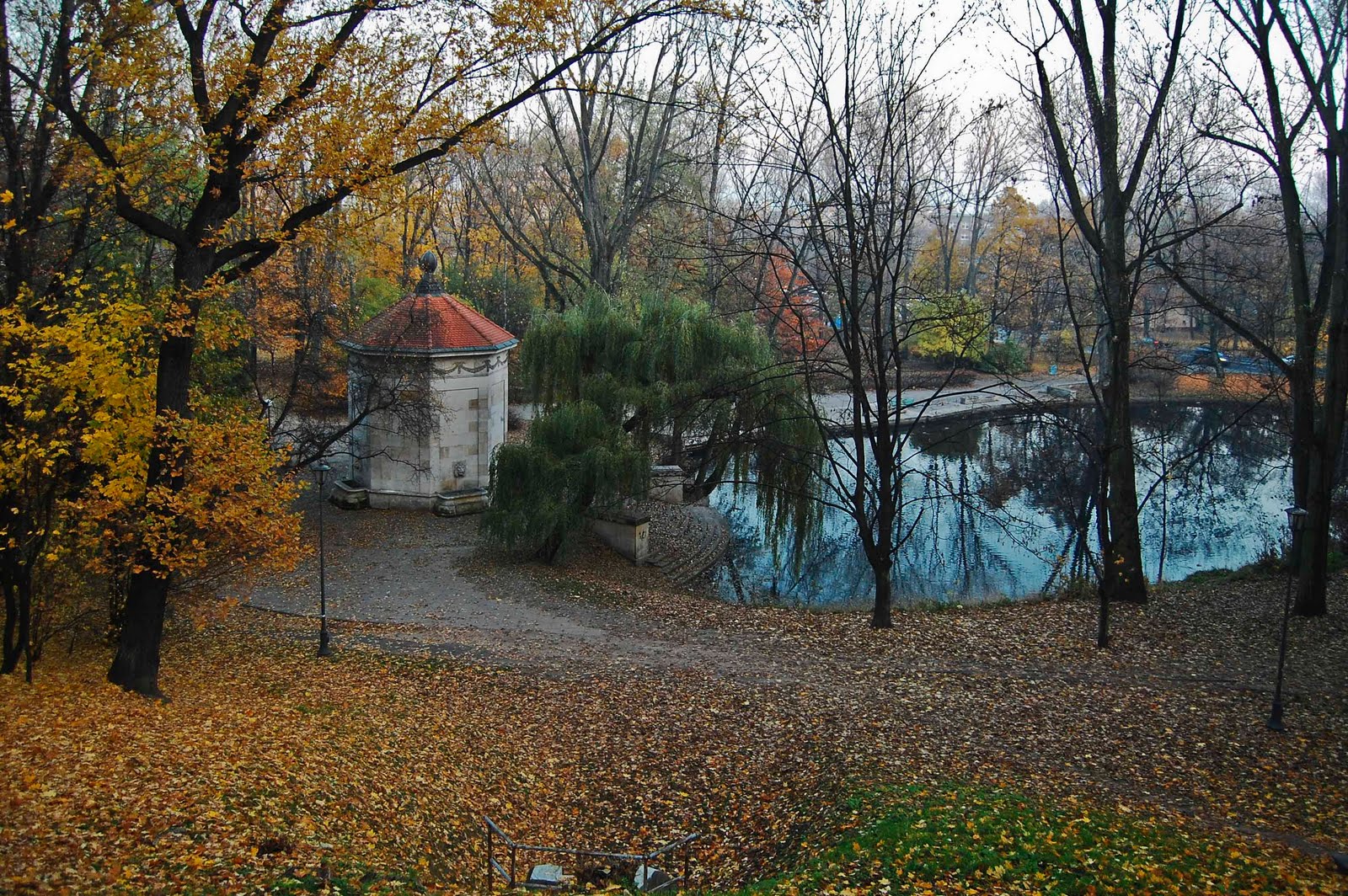
A week away from Powiśle, and yet it beckons me back... above: Park na Książęcem, looking down the Vistula escarpment. The park, named after Prince Kazimierz Poniatowski, is part of a larger complex of public open space, the Marszałek Edward Śmigły-Rydz Park, which forms the western border of Solec.
   
Beautiful cloudless blue skies, trees clad in autumnal gold that also carpets the ground. This time last year, the trees had lost all their leaves. I must say, the clocks going back last weekend is becoming a pretty senseless exercise. As it is, even with the time change, I wake up in darkness (at 05:40 weekdays), so all that's happened is that I lose an hour of daylight in the evening. Time to scrap wintertime - summer time all year round for me, please! 

This time three years ago: 
A town called 'Tunnel'

Three years ago today, also: 

Wednesday, 20 October 2010

Crushed velvet dusk in my City of Dreams II

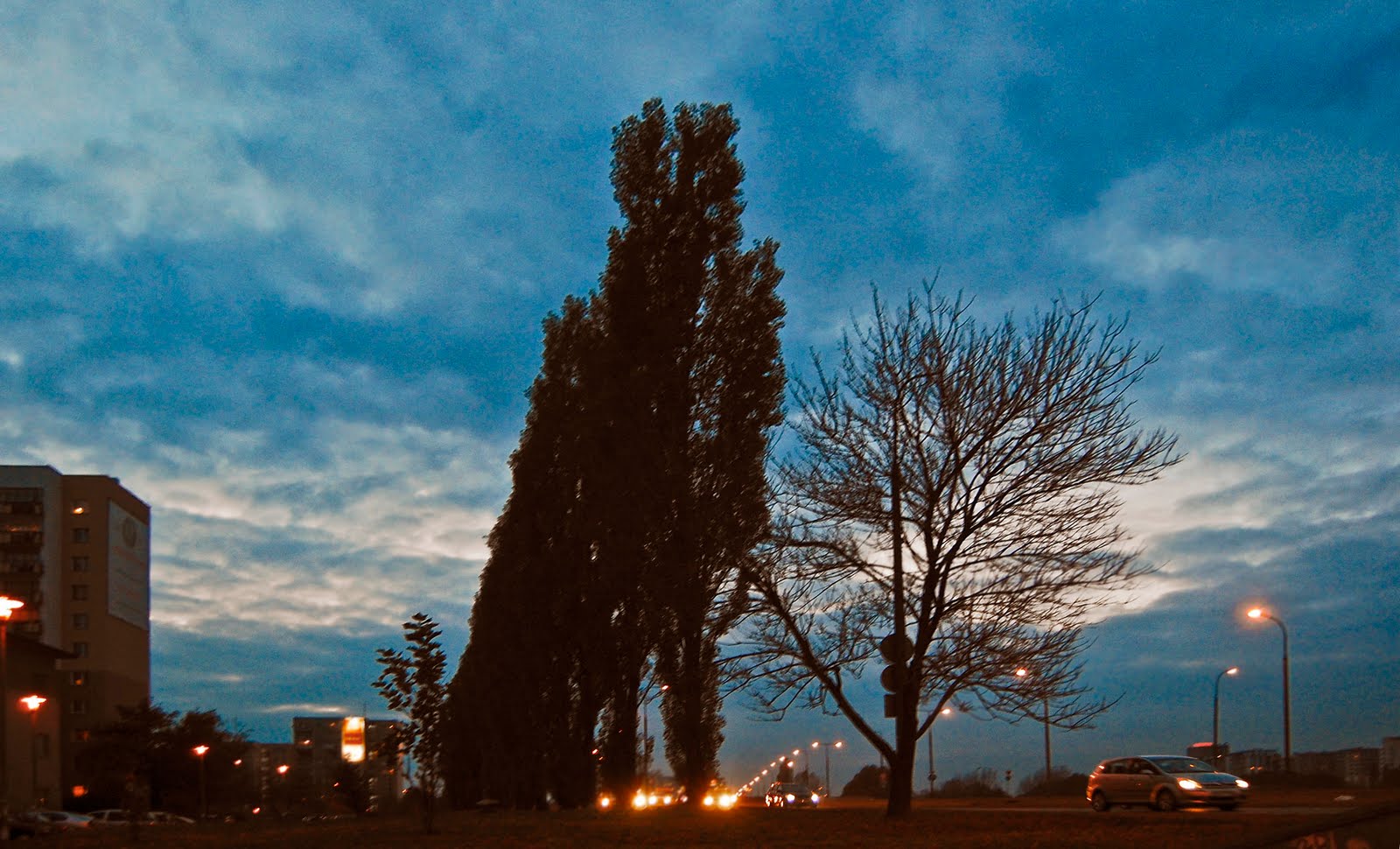
Drivetime, just before the clocks go back. The saps are sitting in their cars, frustrated by the endless jams. The cyclepath is empty; crank up and go, shooting from the saddle. This is good. Above, the car wash on Al. Generała Władysława Sikorskiego. Below: traffic not moving a whole lot faster on Dolina Służewiecka. Below: Dramatic sky over Ursynów. Approaching junction with Al. Jana Rodowicza "Anody".
  Below: The cyclepath crosses under the main road and emerges on the Ursynów side, with a 600m hiatus between the tunnel and the path running down Al. Ken. Below: Ursynów by night - Al. Komisji Edukacji Narodowej (KEN). Cyclepaths as good as they get; divided from traffic and from pedestrians by low hedgerows. Let's have more. See original post Crushed velvet dusk in my City of Dreams from April 2008 which inspired this post.