Tuesday, 21 December 2010

Dense, wet, rush hour snow

Snow started falling in the afternoon. Instant knock-on effect on public transport - no buses for 20 minutes then three at once. Temperatures stayed below zero. The 162 was hideously packed. Leaving my office 12 minutes early, I arrive 16 minutes late at my destination, a mere seven bus stops away. Not good.

Indeed, once back in my car at Ursynów Park & Ride, I could appreciate the comfort factor of not being squeezed into an overcrowded bus. My own space, my own music, to which I can sing along to (loudly). The lure of the private car at this time of year is strong. To tempt motorists away from their cars, city authorities need to provide more buses and more bus lanes. More trams and Metro also appreciated!

Left: ul. Targowa in the heavy snow. One of many Warsaw streets named after Russian (or Soviet) generals. General Alexander I. Targov was responsible for murderous repressions following the January Rising of 1863. Other streets named after former oppressors: ul. Ogrodowa (Stalin-era Politburo member General Ogrodov) and ul. Towarowa (WWI field marshal, M.B. Tovarov). There are more.

Polish translation conundrum of the day: pretensja as in 'mieć pretensje do kogoś'. To 'bear a grudge' or to 'harbour a grievance' is, to my mind, too strong. Grudges and grievances one bears, or harbours, or even nurses (!) for years. Pretensje are usually forgotten about within days, unless the cause is endemic ('he's always late'). Pretensje can be easily laughed off, grudges can't. To have pretensions (airs and graces) is captured by the adjective pretensjonalny, which gives rise to the danger of the false friend 'to have pretensions against someone' when translating mieć pretensje do kogoś into English. Any better suggestions than those offered by Oxford/PWN and Getionary?

Monday, 20 December 2010

Kidnapped by Koleje Mazowiecki

For the first time since the introduction of the new railway timetables last Saturday week, I chanced a ride to work on Koleje Mazowieckie. Since the snows began, the performance of Poland's railways has been dire. My experiences so far this winter have been of cancellations and delays longer than the usual journey time. The introduction of the new timetable is usually entirely virtual, since trains keep running (on my line anyway) to the old timetable for weeks regardless.

And so it was this morning. The advertised 07:38 train arrived at 07:54 (i.e. as per old time table). Just a three-car set of EN-57 rolling stock (above) - totally inadequate for the jam of passengers trying to board. But by W-wa Służewiec I manage to get a seat.

So engrossed was I in Bulgakov's The Master and Margarita, that I fail to notice that the train pulled into W-wa Centralna rather than W-wa Śródmieście... The train emerged from the Tunel Średnicowy on the wrong track, passing W-wa Powiśle without stopping. Soon, I am being whisked, against my will, across the Vistula (below).

The train continues past W-wa Stadion and arrives (no doubt on time according to the old schedule) at W-wa Wschodnia, the eastern gateway station. I look round to see what's happening. I see the following sign (below) and challenge my bilingual readers to translate this a) literally and b) usefully into English.

The cause of this notice soon becomes clear; the station is undergoing a remont. I use the Polish word remont rather than 'repair', 'renovation', 'refurbishment', 'remodelling', 'restoration' (or one we saw last week in the Old Town, 'revitalization'), because it so direct and to the point. Indeed, I urge my English-speaking readers to start using this word in English - it is so useful. Which of the many different possible translations into English of remont most accurately captures the flavour of what's happening at the station right now? You'd need to be a consulting engineer to come up with the one English word that precisely defines this type of work. But remont - we all know what it means!

Above: Warszawa Wschodnia station undergoing its remont. Ticket booths are outside in the open air, most of the facilities are closed. The outside clock (click to enlarge photo) has stopped; it says 05:45. Trains are running late or very late. Finally I board a west-bound train and 50 minutes later, I'm back at W-wa Powiśle, and late for work.

Sunday, 19 December 2010

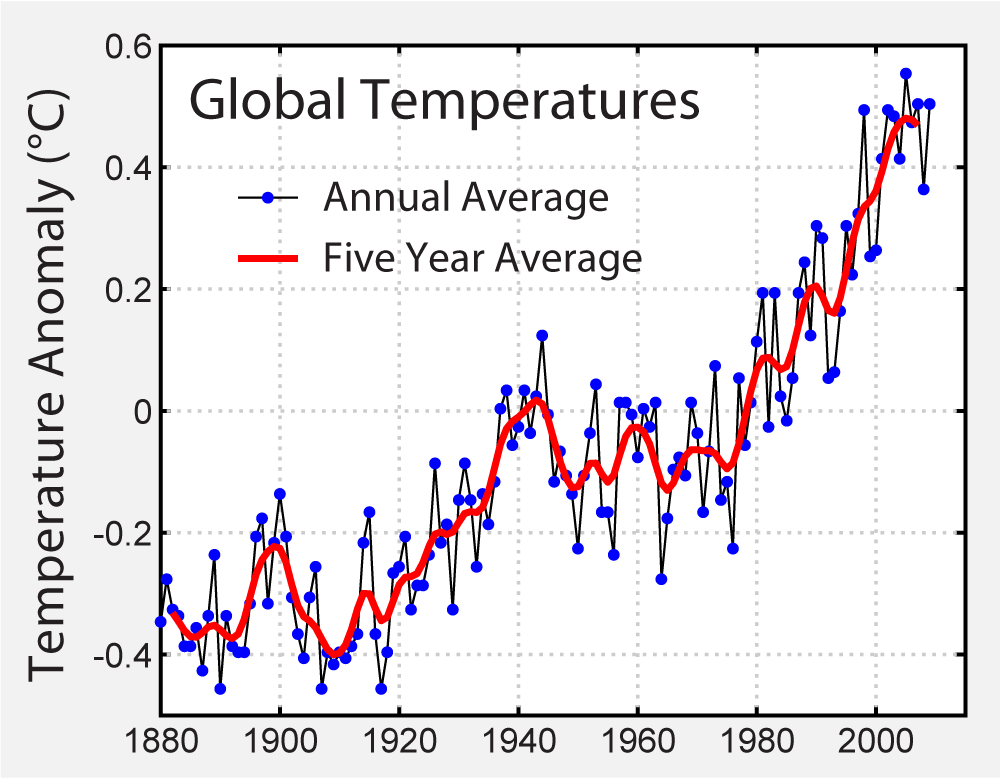
Global warming or climate change?

My wife was due to fly to England today, but all the flights to Heathrow have been cancelled due to snow on the runway. In years gone by, the main meteorological risk was fog. But this is now the third year in a row that the UK faces 'unprecedented' wintery weather at this time of year.

Back in 2008/09, when the capital experienced the heaviest snowfalls in 20 years, London's mayor Boris Johnson said that investing in snow ploughs to keep London's streets clear would be a questionable investment. He said that the £27m cost of buying adequate numbers of snow ploughs (London had only 16 of them!) would be scoffed at should there be another 20 winters during which there would be no heavy snow.

Last winter, we turned up at Luton Airport to find our hire car under eight inches (20cm) of wet and heavy snow. "Please check the car on collection to ensure that there are no scratches or other minor damage for which you will be charged on return" - a joke. I was indeed charged £35 for a scratch to the front bumper - I could not prove it was not me, as I was unable to inspect the car on collection. And of course - no winter tyres.

Not only on hire cars - winter tyres are completely unknown in Britain. The police, fire and ambulance services do not use winter tyres. Buses do not use winter tyres. Nor do emergency breakdown services. Last Christmas, the battery on my mother-in-law's car packed up. The AA came to fit a new one - and the breakdown van got stuck on a relatively gentle incline. I had to help rescue the rescue service with a shovel!

Looking at the UK press reports of snow chaos, the words 'snow ploughs' and 'grit' are all over the pages, but 'salt' or 'winter tyres' are noticable for their absence. Grit is not an answer. The kind of road salt used in Poland (calcium chloride rather than sodium chloride or table salt) when mixed in the right proportions with water will only freeze at temperatures of -20C. This type of salt is used rarely in the UK. Grit improves adhesion between tyres and road but does not lower the freezing point of water.

So three snowy winters in a row in the UK after a long run of relatively warm ones. "Global warming? What global warming?" one hears. The phrase (used in connection with the results of rises in atmospheric carbon dioxide levels caused by human activity) has been superceded in the media and government circles by the term climate change, though the terminology is synonymous. Though when local temperatures fall as a result of an overall rise in global temperatures, the voices of the doubters become louder.

As the polar icecap retreats, so icebergs drift south, pushing the Gulf Stream, which warms Britain in winter, is diverted southward. And so a warmer globe paradoxically makes the UK subject to colder winters. In theory.

In practice, looking back since I started blogging in April 2007, I can see that extreme weather events are becoming more frequent; in the case of Poland it's summer flooding rather than unusually cold winters (which until recently seemed to have been getting milder).

My take on climate change/global warming is analogous to Pascal's approach to the existence (or not) of God. If God exists, and I don't believe in Him, I'm damned. If God doesn't exist and I do believe, I've lost nothing. If God does exist and I believe, I'm saved. Similarly, if the planet's climate is not changing due to anthropogenic causes, but I'm careful with my energy use, I've lost nothing, at best I've saved money. If my actions can help slow down global warming, I'm doing something useful. So cut your carbon footprint - couldn't hurt.

Saturday, 18 December 2010

Happy ever after

The Christmas edition of the Economist is always one to cherish. As well as the usual politics, business, finance, science and arts coverage, there are numerous articles of more general interest that appeal to the inquiring mind. A good read, and one that lasts for longer than just the Christmas and New Year's break.

This year's cover story is the incredibly optimistic news that as we age, we get happier. It seems, then, that the Polish saying Starość nie radość ('Old age isn't joy') is somewhat overstated.

This is not, in itself, new news. The BBC covered this in its series on happiness (The Happiness Formula) back in 2006. On the basis of data collected from around the UK, researchers showed that humans reach a low-point with regards their happiness somewhere in their mid-40s, and after that, their happiness levels start to rise.

What makes the Economist's article convincing is the global sample. It is based on research examining happiness in 72 countries around the world. Globally, it seems, the pattern is similar to that which the 2006 UK data shows. We are happy when young, then our happiness declines. The age at which it hits a low point varies from country to country, with Switzerland (35) and Ukraine (62) being the outliers. But the global average is 46; on reaching this age, life gets happier and happier. Hence the Economist's cover caption, Life begins at 46.

Old age, since the Swinging '60s and the dawn of the Permissive Society, has been seen with dread by the young and middle-aged. Now, it seems, we have far less to fear than we had imagined.

My mother (83 and in good physical and fine mental condition) often tells me that "the best is yet to come" on the basis of her own life experience. Thank you! I look forward to it - armed with statistical evidence from around the world that this indeed is the case.

Friday, 17 December 2010

Matters of Style

Writing style is so important in good communication. One associates "style" with elegant phrasing, sentence structure and the flow and rhythm of the prose - yet for writers and editors it's more basic than that. At its most elemental, style is about keeping consistency in form.

Do you write 10 000, 10,000, 10000 or 10 thousand or ten thousand? Is it Prof. Smith or Prof Smith? Do you standardize with a 'z' or standardise on an 's'? What's the rule on Usage Of Capital Letters? Did that cost you £50, 50 GBP or fifty quid? Do you italicise (or italicize) titles of books, films, plays etc. - or do you put them in inverted commas? Single or double inverted commas? Would you abbreviate addresses from Street to St. (or St), from Road to Rd. (or Rd)? Would you say "The company is working..." or "the company are working..."? When is correct to write "The team are working on..."? When would it be right to use colloquialisms?

Fortunately, over the centuries, a body of works has emerged, generally published by university presses and newspapers, setting out clear guidelines for writers submitting texts for publication.

In UK English, Oxford and Cambridge universities have long published style guides, and most newspapers have their own too. In US English, the Chicago Guide to Style and the Associated Press Style Guide are the best known.

Over the years, I've used the Economist's style guide (buying the book version back in the 1990s) and have generally abided by its rules on this blog. The Economist style guide is available online and the Johnson blog, linked from my bloglist , often expands on points from the style guide. [Is there a Polish online style guide available anywhere?]

Working for nearly all my life in the world of corporate communication, I notice how few companies have their own style guide for the written word (or even feel the need for a one). Most companies will have clear guidelines about the use of their corporate logos, typography, etc. Yet questions of writing style are often ignored, resulting in foggy communication cluttered with jargon, inconsistency and lengthy sentences.

For corporations operating on a global scale, using different languages for different markets, this problem is exacerbated. Style guides need 'localisation', so that conventions used in the original language (usually English) are neatly and consistently translated into the local language.

Looking at Polish, I can see this is a problem in both directions. Non-native translators of Polish into English will happily translate "Ponad 935 tys. pracowników..." as "Over 953 thousand employees..." rather than simply write "Over 935,000 employees". On my (tidy) desk I have English-language investment brochures published at great cost by local authorities from across Poland. Beautiful photography, graphic design, print (with spot UV varnish) - sadly let down by poor translation and by evident lack of the translators' reference to any English style guide.

From one I read: "Płock is also the seat of the oldest high school in Poland, established in 1180, known as „Małachowianka” and of the Płock Scientific Society, which collection includes valuable manuscripts..." Taxpayers' money spent on an impressive and well-printed brochure would have been far more effectively spent had a tiny fraction of the cost of this publication been spent on running the text past a native English speaker. He or she would have pointed out that in English, opening inverted commas are ranged with the top of the text and not the bottom (as in Polish) and that usage of the relative pronoun 'which' is wrong (should be 'whose'). Hyphen and dash misuse abounds and unusual words ('monodic', 'humanistic') bring the English reader up short.

Avoiding such errors is easy; native English speakers can be found in any larger Polish city, style guides are available free online. It is harder, however, translating corporate brochures into Polish. Now this requires rare skills, especially when no one has yet created an in-house style guide in Polish.

And finally, one bugbear. The word 'sustainable' has become very much in vogue in business English; 'sustainable growth' means that a business can grow long-term, taking into account its effect on society and the environment, its employees and other stakeholders. In short, a company that focuses on sustainable growth is more likely to be around in 50 years time than one focused on maximising short-term return for shareholders. The usual Polish translation for 'sustainable' is zrównoważony, which means 'balanced' rather than 'capable of lasting for a long time'. Given that 'to sustain' is podtrzymywać or utrzymywać, surely 'sustainable growth' would be more accurately translated into Polish as podtrzymywalny wzrost?

Answers please! (Plus any links to Polish style guides gratefully received.)

Wednesday, 15 December 2010

Orders of magnitude

Well! Back online - what a relief. Still, it was good for the children to be without a computer for nearly five days; time spent in traditional pursuits - song, sewing, piano playing, film-making.

Back to blogging - normal service will resume shortly.

The computer's power supply unit (here Polish has a single word zasilacz; three syllables in place of six) had indeed packed up. And while getting it replaced, I ordered another hard disk drive for the computer - a splendid one terabyte of storage space. This is on top of the 300 gigabytes it already had. So now, there's 1.3TB available to store photos, films and music. I've backed up three and half years of photographs, in high-resolution, taking up just one-tenth of the capacity of the new drive - a mere (!) 100GB. The new hard drive cost 260 złotys, or £55 - which to me is mind-bogglingly cheap compared to how much storage used to cost.

Compare my past computers' hard drives:
1992 Apple PowerBook 140 laptop: 40 megabytes
1995 Apple Power Mac 5200: 2 gigabytes (2,000 megabytes)
2002 PC desktop computer: 40 gigabytes (40,000 megabytes)
2007 PC desktop computer: 300 gigabytes (300,000 megabytes)
2010 Upgrade to the above: 1.3 terabytes (1,300,000 megabytes)

That's 32,500 times more storage space for data - in Moni's lifetime (that first PowerBook was bought so I could work from home after Moni was born). Pricewise - computers cost roughly the same as they did. It's just that they do so much more, so much faster. Plus the internet.

Megabytes. Back in the '80s the word "mega" was a neologism - it meant thousands of times better, faster - mega. The world was at the start of its great* journey towards today's digital era of internet, mobile telephone and satellite broadcasting, the word "mega" signified the most up-to-date, fantastic, incredible anything.

From Urban Dictionary:
Mega:
Adj. Very, really, extremely. Used for more emphasis. Something or someone is really good, amazing and/or wonderful, etc.
1. That's mega awesome, man!
2. That was just mega wrong.
3. Ah, that's mega, mate.

How archaic! A problem with neologisms - especially ones related to technology - they have a short sell-by date. How long before terabytes give way to petabytes? 3TB hard disk drives are now becoming available...

* Note the over-use of the English word 'great'. At a conference the other week, the English chairman sprinkled it liberally throughout his introduction. "If you turned off your mobiles, it would be great." "That presentation was great." "We have a great panel here today." Etc. The epithet should be used sparingly; King Arthur The Great, Great Depression, the Great War etc.

In this regard, the Polish word wielki has maintained its strength and using it trivially actually sounds comical. Król Kazimierz Wielki. Both 'great' and wielki are pretty much exact translations of the Latin 'Magnus', so rząd wielkości = 'order of magnitude', and thus we come full circle...

Monday, 13 December 2010

Life without a computer

Just a holding post from the office; on Friday night the computer's power supply unit failed (zasilacz - a neater one-word Polish term for the item). On Saturday morning I took the computer round to the shop in Ursynów to get it fixed - how quickly it will be ready depends on whether a) they can easily find a replacement for the part b) if there's not something else amiss, such as the motherboard or processor, or ventilation etc. Until the computer's back in the house - no more substantive (merytoryczny - another useful Polish term generally unavailable to the English speaking world) posting. Apologies for not replying to e-mails sent to me over the weekend.

The children took the news of a broken-down computer badly. "Without Facebook or Google, WE WILL DIE!" wailed Moni. Shades of "Dad, F-Troop's fuzzy" from A Serious Man.

TV I can well do without. But not having a computer with Internet access these days is akin to a lack of hot and cold running water.

Friday, 10 December 2010

What's the Polish for 'pattern'?

A linguistic gap that catches me out, grappling to find a good Polish word or words for one commonly used in English.

Consider the following sentence. 'The police are looking for a pattern in the criminal's behaviour'. Here the word 'pattern' means not 'repeating ornamentation' but rather 'a series of events or numbers happening in a predictable manner'. Patterns recur (powtarzają się).

'Pattern' as in 'that's a nice pattern on the wallpaper' is of course wzór. In military terminology, a 1937-pattern field cap is czapka polowa wz. 1937. Allied to this meaning are the words deseń, wykrój, szablon... but evidently none fit the sentence considered above.

In maths, the term wzorzec is close in meaning to 'pattern' as in 'mathematical model'. Całokształt is another suggestion, we're getting closer now, but still not there. Getionary offers us this example: 'Overall pattern of laws and principles' = Całokształt praw i zasad. (Now, how would you say in English całokształt pracy autora? 'The entire body/corpus of the author's works?' It's long-winded an fails to capture the sense of the Polish.)

Returning to the usage of 'pattern' that launched this question. Consider now the sentence 'Patterns of consumer spending are changing'. You'd be forced into something like typowe sposoby wydawanie pieniędzy przez konsumentów zmieniają się, rather clumsy and missing the point some.

Can anyone come up with a decent translation for the word 'pattern' that could be used in the sentences below?

  • Weather patterns in May are fairly stable.
  • There is a pattern to his lateness.
  • My sleep patterns have become somewhat disturbed.
  • Things started to fall into a regular pattern.
  • We're looking for a pattern in the sales figures.
  • A recurring pattern began to emerge.