Sunday, 5 June 2022

Blues and greens of early June

Sunday 5 June - meteorologically, a perfect day. Cloudless, hot - but not too hot (24C in Chynów).

Thirty seven kilometres in a straight line between where I'm standing (the Jakubowizna exit from Chynów station) and the distant skyscrapers of Warsaw's new central business district. A mere 37km, but a long way from town. My 70-300mm Nikkor telephoto zoom lens draws nearer the horizon; rays of light skipping over Sułkowice, Czachówek, Piaseczno, Jeziorki, Okęcie, ulica Filtrowa (where my father lived before the war) and W-wa Główna station.

Below: a thousand paces and just around the corner from home - good to be here at this time of year, when the greens are pure, not yet burnt by the sun. And the sky is Kodachrome blue.


Left: I am particularly fond of this view, looking up from the dip in the road, where the drainage culvert runs under it and the railway track to the left. And to the right, an orchard, the same one that can be seen on the extreme left-hand edge of the photo above. 

Short shadows from the west - late afternoon as the year approaches its zenith. An aesthetic zenith too. The spirit of place is strong - late spring, early summer feels optimal.

Below: ulica Spokojna (lit. 'calm street' or 'peaceful street') heads out of Chynów. Photo totally unretouched .jpg file, straight out of the box, as it were. Polarising filter, duplicating the effect of sunglasses, the only artifice here.

Further along ul. Spokojna, although now in Węszełówka; in the distance the new level-crossing barriers are down, and a Koleje Mazowieckie train heads north for Warsaw. Sublime smells - hot sun on pine trees - bring back memories of holidays in Stella-Plage, northern France.


Left:
a buzzard over the railway line between Chynów and Krężel Quite a large enlargement, even at maximum zoom.

Below: one of the XII Canonical Views of Jakubowizna, looking immaculate here. Note the tiny white speck in the sky - an airliner turning in for final approach to Warsaw Okęcie airport's Runway 33.


This time three years ago:
This land is my land

This time six years ago:
Preening stork

This time nine years ago:
Preserving meadowland - UK and Poland 

This time ten years ago:

This time 11 years ago:
Cara al Sol - a short story

This time 12 years ago:
Pumping out the floodwater

This time 13 years ago:
To Góra Kalwaria and beyond

This time 14 years ago:
Developments in Warsaw's exurbs

Friday, 3 June 2022

Stills from Katowice

Poland's most improved city? The progress that Katowice has made in the 25 years that I've been in Poland is impressive. From a dirty, smoky coal town to a modern urban agglomeration based on shared services/ outsourcing and advanced manufacturing, the contrast in such a short space of time is hard to believe.

The local economy is doing remarkably well; photo taken from Wełnowiec DL Tower, which Google Maps Street View shows as an empty plot back in 2017 and old industrial premises in 2014. The new building is nearly finished and 93% of the space has already been rented. From the ninth floor, I can count eight cranes on the skyline. The highest building on the skyline is the KTW building.


Left: the KTW building, at 134m is the tallest office tower in the Silesian agglomeration; the first tenants moved in four months ago.

In front of it stands the monument to the three Silesian Uprisings of 1919-1921 which saw Katowice returned to Poland. I remember the unveiling of the monument in 1967 - it was on the covers of the Polish media that our families in Poland would send us in London. To me the sculptures, by Gustaw Zemła, looked like three shrouded grand pianos standing on their ends. Apparently, they are meant to be wings.

Below: monument commemorating the Polish boy scouts and girl guides who took part in the defence of the city in September 1939, a dozen or so of whom were executed after the city fell to the Germans. I am minded that what Poland had experienced with its aggressive neighbour to the west, Ukraine is dealing with right now - Poland has had peace with Germany for 77 years, but only after Germany was thoroughly de-Nazified and demilitarised. Russia must undergo a similar process.


I woke up this morning to this view - Katowice station, across the road from the Mercure hotel where I was staying. Note the string of locomotives - at least four coupled together - an unusual sight.


Below: ulica 3 Maja, a major east-west thoroughfare through the centre of Katowice. To the left, Galeria Katowice, a copy-paste Polish shopping mall, tenants including all the shops you'll find in the major malls of Warsaw, Kraków, Poznań, Wrocław or Gdańsk. Some signs of the Russian invasion of Ukraine; an information centre for refugees, a contact point in the station building, mothers speaking Ukrainian to their children, people shaking collecting tins in the street.


Mid-morning, Friday, not too busy. Good to see cars excluded from much of the city centre. Amid the urban clutter and signage - but some interesting architecture at the end of this pedestrianised street... Let's stroll down and take a look.


Below: classic Katowice architecture - the Adam Mickiewicz senior high school ('general-shaping lyceum'), built in 1900 in neo-Gothic/Renaissance Revival style. Red brick, cleansed of its former sootiness, very characteristic of the region.


Under a bright blue sky, the contrast of old brick tenements and modern office and retail space, the city of Katowice looks an attractive place to live and work - and from the top of the office buildings, you can clearly see the mountains.

This time 11 years ago:
Szmulowizna

This time 12 years ago:
Jeziorki's Storm of Storms

This time 14 years ago:
How to tell you're flying over Poland

This time 15 years ago:
Poppy fields


Monday, 30 May 2022

Textures of Childhood

Deep memory is strongly sensory; smells in particular trigger memory flashbacks. Identity is memory; without your memories, you are no longer you.

Recently, I had a few memory flashbacks triggered by texture - the sense of touch. Not as strong or frequent as memories triggered by smell, but still very specific. In particular, furniture in my childhood home in Hanwell, West London. The green corduroy covering of the chairs in the living room; the mid-grey of the armchairs and sofa in the front room; the veneer on the side of the television set; the bobbly material of the curtains in my bedroom, red on pale yellow. The enamel paraffin stove that heated the bathroom on cold nights. Carpeting - and the Dunlop underlay, green and spongey. I associate with play, building cars and trains out of Lego, rolling them across the carpet, the tufts 

Texture of textiles too - the towelling beach robes my mother sewed for me and my baby brother when we holidayed on the Isle of Wight in 1964; my green-and-white striped school scarf, which I remember best from foggy days, breathing in through the damp woollen fibres, grey flannel school trousers, gaberdine school raincoat..

Bedding in the pre-duvet era, from itchy woollen blankets to the candlewick bedspreads - and the time-consuming art of making one's bed each morning - is another memory.

In the 'summer house' (as our garden shed was called, brick-built and glazed, under a sloping asbestos roof), there were gardening tools - these had one thing in common; wooden handles that would often splinter, causing pain to young hands. Bricks - I can recall clearly the texture of the front-garden wall; I would sit astride it, my horse, my railway engine.

A propos of sensory memory flashbacks - we have transported around 30 large and medium-sized boxes full of books from my late parents to Jeziorki; a big thanks to Marek, Jane, Felix, Eddie and Moni - many lengthy Zoom sessions looking at what goes where (to Derby, to Warsaw, to charity, to the skip). Bit by bit I am sifting through them; many books will head down to the działka (but first I need a floor-to-ceiling, wall-to-wall bookcase built for them all). 

In the meanwhile, my garage, where it's all sitting right now, has taken on the odour of 79 Cleveland Road! Walking into the garage now with my eyes closed, I sniff the air - and am transported a thousand miles to the west.

This time last year:
Stupendous sunset, Sułkowice

This time six years ago:
Politics - the importance of fact.

This time seven years ago:
Rural Mazovian toponyms

This time eight years ago:
Carrying the weight on both shoulders

This time nine years ago:
Railway history - the big picture

This time 11 years ago:
A new lick of paint form W-wa Powiśle

This time 12 years ago:
The ingredients of success

Sunday, 29 May 2022

These are signs, tokens

As I wrote last week, a visible indicator of the ever-nearing completion of the S7 extension (Stretch A, 6.7km from the airport junction to Lesznowola), is the appearance of road signs. And quite odd they are too...

Imagine – you are driving north up the S7 (European route E77); you pass Węzeł Zamienie (junction 66); the next one to the north is coming up soon – junction 65 for the S2 is but a kilometre away. But what's this? You do a double take at 90km/h. 

Siedlin? 

Where' the fuck's Siedlin? MORE TO THE POINT – WHERE'S WARSAW? AND WARSAW AIRPORT MUST BE AROUND HERE SOMEWHERE! HAVE I TAKEN A WRONG TURN?


Siedlin, it turns out, is a "village in the administrative district of Gmina Płońsk, within Płońsk County, Masovian Voivodship. Population (2011): 369. It lies around 5km south-east of Płońsk and 59km (37 mi) north-west of Warsaw" (Wikipedia). Only if equipped with that arcane piece of information can you surmise that you're still some 21km south of  Warsaw at this point.

But what a daft place-name to put on a road sign! It turns out (for those who really know their Polish trunk-road geography) that Siedlin sits on the junction of the S7, the DK50 (Warsaw's de facto and incomplete ring-road) and the DK10, the road to Szczecin. So now you know.

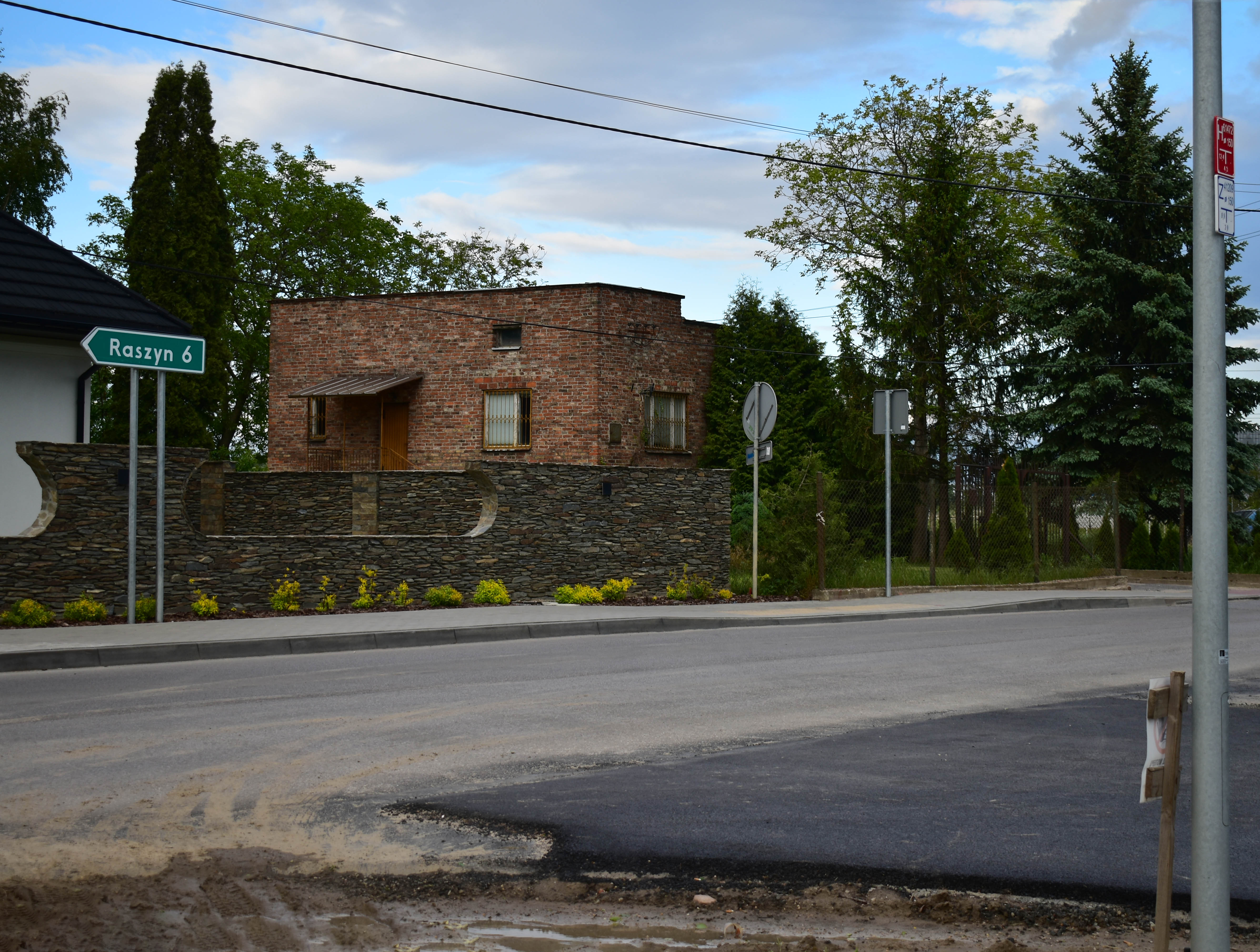
More confusing signs. The ones for Raszyn from Węzeł Zamienie are downright misleading. In both cases, if driving from the south, you'd be much better placed to carry on north to the next junction for Raszyn, then take the S2 eastbound one junction to Aleja Krakowska, then turn south. Avoiding the villages of Dawidy Bankowe, Dawidy, Jaworowa and Rybie. Dual carriageway all the way. Not narrow rural roads.

Below: a few years ago, standing in this spot, the view would have been entirely unrecognisable. Above all, you'd be in the backyard of a farm, just fields ahead. My local landscape, utterly changed.


How it looked in the summer of 2018, click here.

Below: this sign is for drivers approaching the S7 junction from Dawidy. At least Warsaw is mentioned on this one. But don't even think of taking your horse and cart that way. Raszyn? Carry on for Warsaw, one junction north, then turn west, and come off after one junction. Faster, avoiding four villages.


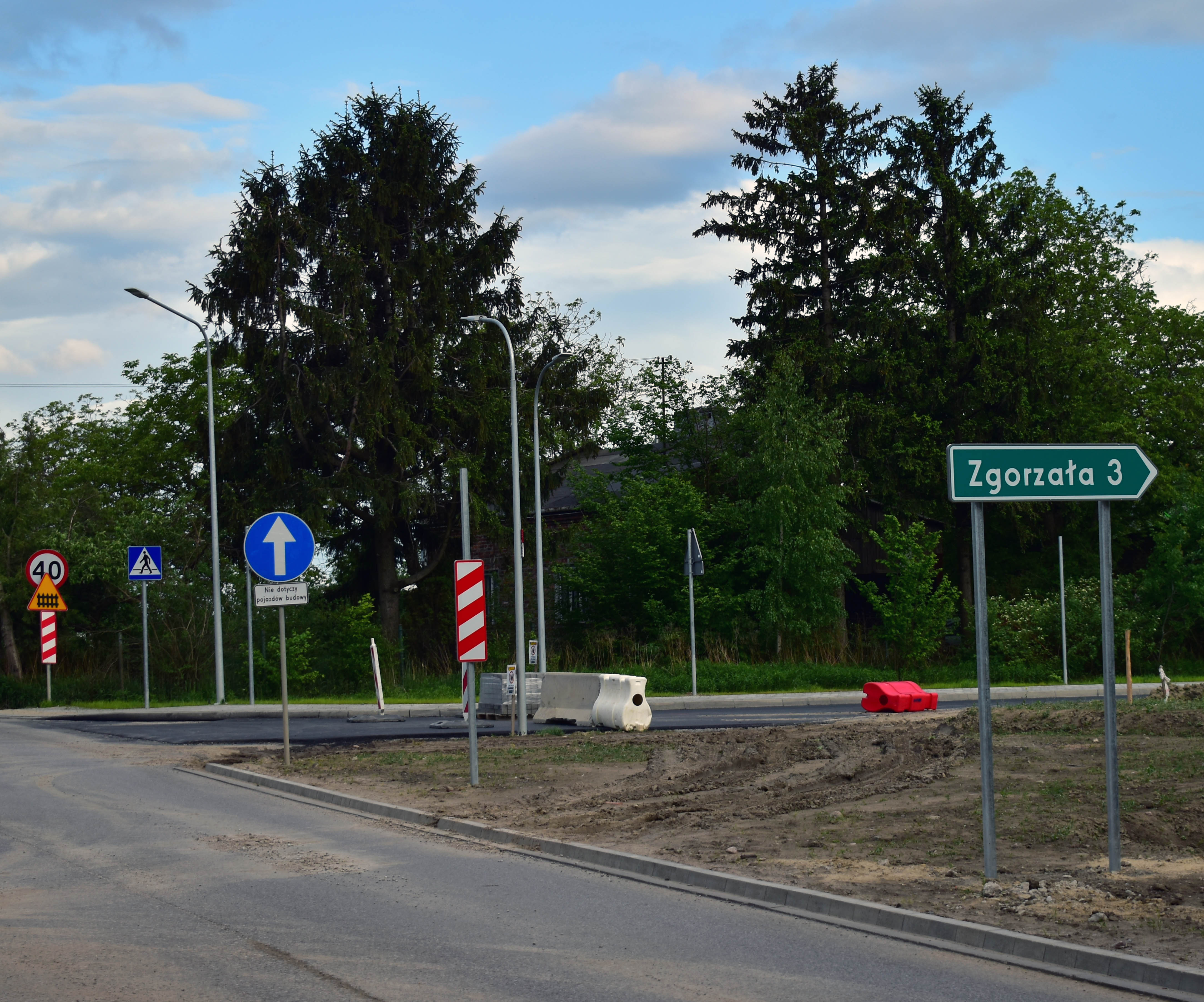
Meanwhile, a misleading sign for anyone heading to Zgorzała from Warsaw. The southbound slip road shows the turning right to Zgorzała along with Zamienie and Raszyn... it is not! You'll end up on the western roundabout having to backtrack, assuming you realise you need to return from where you came.


This, below, is the real turn for Zgorzała – on the other side of the viaduct, the slip-road leads to a spiral ramp, up and over the S7 on the viaduct, around the roundabout two photos up, and on to Zgorzała that way. A saving of half a kilometre of pointless driving.


Another misleading sign is at the top end of Zgorzała, for Mokotów, herding local traffic down ulica Karczunkowska towards ul. Puławska. This is madness. From here, to get to, say, Galeria Mokotów down Karczunkowska, then Puławska, then Rzymowskiego is 10.4km, passing 16 sets of traffic lights. If instead you go to Galeria Mokotów along the S7 and its continuation, the S79 turning onto ul. Marynarska, it's only 9.4 km. The first and last lights are on Rondo Unii Europejskiej and that's it. So why is the suggested route longer, more congested and far slower?

Below: Mokotów is straight on, actually, unless you like sitting in traffic jams.


This time last year:

This time two years ago:
Sunset's trip

This time eight years ago
The importance of the rucksack for the body

This time 11 years ago:
How I almost saved Barrack Obama

This time 13 years ago:
Some anniversaries missed

This time 15 years ago:
Hissing of the summer lawns

Friday, 27 May 2022

Olden times in Wrocław and Gliwice

Travels by train around Poland are somewhat hit-or-miss these days with big delays being commonplace; is our railway infrastructure being hit by hackers from Russia? Opóźnienie może ulec zmianie. Za poniesione niedogodności przepraszamy. ("Delay may succumb to change. For indignities sustained, we apologise."). My return from Wrocław was punctuated by an hour-long transfer at Gliwice, chance for a wander around. 

The railway station (below) is complete, but access to it from front and back is complicated by a mass of reconstruction work from the front, and the building of a new bus station at the rear.


Below: plenty of pre-war architecture to remind one that this was once the German city of Gleiwitz. 


Below: unthinkable that ghost signs in German would have been visible even 20 years ago; with Germany and Poland both comfortable about their present borders, it's not a issue.


The same in Wrocław, 90 miles (145 km) north-west of Gliwice. Below: a pre-war shop sign adorns a branch of Poczta Polska on ulica Kościuszki; tastefully renovated facade, listed building. Google Maps Street View image from 2017 shows the building without the pre-war sign.


Below: I stayed at the Hotel Europejski, which I can highly praise for the price/quality balance. If you're thinking of staying here, choose a room facing the side street; the trams are noisy early in the morning.  


Below: Wrocław Główny station, always worthy of a snap. 


As I crossed ulica Oławska, I spotted this delightful two-door Opel Manta (the pre-facelift B1 version 1975-81); the butt of German jokes in the 1980s, but today a classic. 


Another two-door coupe of similar vintage, the Honda Prelude (1978-81), again in original pre-facelift form. Both these cars will hit their half-century some time this decade! Good to see a thriving classic car scene in Wrocław.


Below: some brutalist architecture from the 1960s, ul. Powstańców Śląskich


This time last year:
Are aliens good or bad?

This time two years ago:
Thoughts - trains set in motion

This time four years ago:
Great crested grebes and swans hatch

This time six years ago:
Jeziorki birds in the late May sunshine

This time seven years ago:
Making sense of Andrzej Duda's win

This time eight years ago:
Call it what it is: Okęcie

This time nine years ago:
Three stations in need of repair

This time ten years ago
Late evening, Śródmieście

This time 11 years ago:
Ranking a better life

This time 13 years ago:
Paysages de Varsovie

This time 13 years ago:
Spring walk, twilight time


Wednesday, 25 May 2022

Start late, finish late (more on the Speed of Life)

Genetically, we Homo sapiens are divided into larks and owls; some of us can wake up early and immediately throw themselves into action – get dressed in 30 seconds, gulp down a quick breakfast, go for a run or a walk and write the next chapter of their autobiography before starting the day’s work at 08:00 promptly. Not me. I try, but my attempts at larking end do not usually extend beyond 40 squats while waiting for the kettle to boil. I only really get into my stride after 09:30. And then haltingly.

There are now believed to be 351 individual genes that determine whether we are larks or owls. Those with the greatest number of 'lark' variants will flake out up to 25 minutes earlier than those without them. Indeed, the latter group is more productive after nightfall. The science suggests that if you're not a lark, there's little you can do to be productive in the morning.

I'm clearly an owl, though not an ultra-owl; my productivity is highest in the evenings; I’m holding the plank while listening to science podcasts, blogging or tweeting, my mind racing with thought. Right now, it's gone eight pm, and I'm switched on full. 

Bedtime is the limiting factor, however. Eight hours of quality sleep is sacred – though which eight hours, I’ve come to realise, is a question of season. Moving the clocks to and fro in autumn and spring is dangerous for the human organism, which, like all living beings, is governed by circadian rhythm. The sudden jolt in autumn when we lose an hour of afternoon daylight is critical – I have learnt to counteract the effects by the simple measure of ignoring it. At the last weekend of October, I go to bed an hour earlier and wake up an hour earlier, thus becoming a pseudo-lark for five months of the year. But the clock is a mere convention (czas jest umowny); my body knows that what is accepted as "22:00" between late October and late March is really 23:00, eleven hours after the solar zenith, not ten. What counts is the time between sunset and bedtime.

In practice, however, this is rather a two-hour shift; in high summer I tend to sleep from midnight to 08:00; as the evenings draw in, it’s 23:00 to 07:00. And then when the clocks go back, the target is 22:00 to 06:00. I say ‘target’, because as I wrote the other day, my evenings are a rush to complete the daily targets – work, exercise and creativity. So it’s possible to be in bed half an hour behind schedule –but not much more. 

Being an owl means I’m not chatty at breakfast meetings. These typically mean getting up an hour or two earlier than usual, skipping breakfast at home, making my way across town in crowded public transport on an empty stomach; arriving at my destination grumpy (głodny Polak to zły Polak – 'a hungry Pole is an irate Pole'). My first thought is food rather than small talk. And so I ignore others, piling the sandwiches on my plate, then slinking off to eat them, washed down with coffee, emitting a visible ‘do not disturb’ aura while doing so. After the event, however, full of fresh ideas, I’m far keener to share new insights and network with other participants. I’ll stay as long as it’s polite to do so, or unless – like today – a train awaits to whisk me off somewhere else.

This time six years ago:
Swans' way

This time seven years ago:
Sam Smith, Shepherd Neame and the Routemaster bus

This time nine years agor:
Rainy night in Jeziorki - no flood this time!

This time ten years ago:
Wide-angle under Pl. Wilsona

This time 11 years ago:
Ranking a better life

This time 12 years ago:
Questions about our biology and spirituality

This time 13 years ago:
Paysages de Varsovie

This time 14 years ago:
Spring walk, twilight time

Tuesday, 24 May 2022

Interstices - S2, S7, S79

These are places where soon, the casual walker won't be able to visit. Fencing is going up around the roadworks; before long, the entire junction will be open, with new connections from north to south, south to north, east to south, south to east, west to south and south to west. When the junction was built, it connected only the S2 to the S79 (running into Warsaw, passing the airport); the southern end was a stump terminating in fields that is now turning into the S7 extension. And so for several years, the junction only served traffic flowing east to west, west to east, east to north, north to east, west to north and north to west. So - time for a peek into the new sliproads that will soon be roaring with traffic.

Below: this view you'll get from your rear-view mirror as you drive onto the S2 (westbound) from the S7. This tunnel under the S79 was completed in 2013, when the S79 opened for traffic, connecting to the east-west S2. But this tunnel was built to connect the S7 extension to the S2 westbound. At the time, it was believed that the S7 extension would be ready by 2020. 

Below: since September 2013, these lights have been on, day and night, for over eight and half years. Meanwhile, the local street-art community has been busy. You don't see graffiti on the walls of most tunnels (Wisłostrada, for example), because they are opened soon after completion.


Below: out in the open, the view drivers will have as they prepare to sweep to the right and merge with the S2 westbound, visible in the distance. And then on to Poznań, Berlin and - ultimately - Lisbon.


Below: not really deserving the status of 'tunnel', the link between the S7 and S2 eastbound merely dives under the bridge carrying the Warsaw-Radom railway line. Again, this sliproad has stood idle since being completed in 2013.


Below: abandoned railway infrastructure. Unlike the old signal box, some 80m to the north, this building (I guess a machine room operating the switchgear?) has survived. The signal box was demolished in 2017 during the modernisation work of the Warsaw-Radom railway, its role supplanted by a new digitally enabled control-centre just north of W-wa Okęcie station. Overhead, a KLM Cityhopper Embraer ERJ 190 on final approach, and hurrying south, a Koleje Mazowieckie train on its way to Radom.


If I go in there, I'll see goodness knows what. Let's go and look. There's always some trepidation when entering abandoned buildings; there may be ne'er-do-wells within. But consciously precluding that possibility, I enter. Uninhabited. And amazingly devoid of empty bottles and tins - the outdoor-drinking community are put off by the prospect of having to cross three railway tracks or an expressway.


Below: the same artists that daubed the tunnel?


Below: Google Earth is amazing. The 3D imagery extends well south of Warsaw Okęcie, this view is stunning. North is in the top-right corner.


Below: finally, the same junction, in full, from Open Street Maps. I've marked in red the sections photographed; the south-to-west sliproad and tunnel, the abandoned railway building and the short south-to-east sliproad.


This time last year:
Joys of Spring

This time two years ago:
Jeziorki in May

This time three years ago:

This time five years ago

Sunday, 22 May 2022

Further S7 extension progress

Getting tantalisingly close to the finish, two years and four months since the first scraping away of the topsoil, the S7 extension, there's talk about opening at least the northern section by next month. I'll believe it when I hear the traffic's roar. In the meantime, some final strolls around the site and its environs...

Below: "S79, I'd like you to meet the S7 extension"... South Warsaw's equivalent of Promontory, Utah, where the two ends of the transcontinental railroad met. To the left, the S79 takes you into Warsaw; take the right-hand exit for Belarus and Russia, or turn left and carry on along the S2 for Berlin and Lisbon, or swing north around Warsaw for Gdańsk and Scandinavia. To the right, straight through to Kraków, Slovakia and the Balkans beyond.

Below: at the junction of the western service road, which connects Dawidy Bankowe with Dawidy, work is almost complete. Fencing separates the S7 from surrounding land, yellow posts mark out the boundary of the land for the road ('pas drogowy'); the final asphalt has been laid. Some pavement still needs to be finished, but the end is in sight. 


The service road that runs parallel to the S7 on the eastern side is also nearly ready. Again, the pavement hasn't yet been laid end to end, but the asphalt is down - and to my surprise - the signposts are up! Below: from where the eastern service road meets ul. Baletowa, it's six kilometres to Raszyn ('Fool's Raszyn/Where angels fear to tread')... Raszyn, the Staines of the East


...and from Baletowa, via the new asphalt of the eastern service road, it's three kilometres to Zgorzała. Note the roadsign for gated level crossing - this is at W-wa Dawidy station. While the new road sign encourages curious drivers to take a look, the road is still closed; barriers remain in place.


The big news at the other end is that the pedestrian and cycle viaduct is now officially open. Below: looking west up the newly constructed ramp that meets the bridge structure. Behind me Zgorzała, ahead of me, across the S7, Zamienie. No stairs, just a long, gently sloped ramp at either end. Wide enough for cyclists to safely pass each other. The the left, the eastern service road that takes traffic down to Nowa Wola, bypassing the village of Zgorzała, which will feel massive relief when the S7 opens.


Below:
 from the top, looking south towards Lesznowola. The sign, translated literally, says: TEMPORARY CROSSING. WE ASK FOR CAUTION. DO NOT LEAN OVER ACROSS THE BARRIERS!! Presumably leaning over the barriers will be OK once the crossing becomes permanent. 


UPDATE 28 May 2022: Road signs are up on the S7 - a big development. Grójec - Radom - Kielce - Kraków, this sign would have been visible on the photo above, just before the curve in the distance.


And now, some bonus shots of planes landing on RWY 29, rarely used unless the much-longer RWY 33 is being repaired or, as happened yesterday, there are particularly strong winds from the west. This creates the opportunity of catching the planes against a backdrop of skyscrapers.

Below: a LOT Polish Airlines Embraer ERJ 175 flies in front of the Warsaw Hub and Spire buildings. In the foreground, W-wa Jeziorki station, a southbound train approaching. Photo taken from the viaduct over the tracks.


Left: LOT Polish Airlines Boeing 787-9 Dreamliner in livery commemorating the centenary of Poland's independence, which occurred three and half years ago. Taken at ground level from the S7's western service road north of ul. Baletowa, with the same cluster of skyscrapers as in the photo above. Beyond the treeline, Węzeł Lotnisko, where the S2 meets the S7/S79.

Below: a Finnair Embraer ERJ 190 coming in to land, flying in front of Varso tower. Taken from south of Baletowa, so from a greater distance. 


Below: A Wizz Air Airbus A321neo - something of a Supermarionation vibe here!


This time last year:
Town and country

This time two years ago:
Covid and economy recovery

This time three years ago:
Electric cars for hire by the minute

This time six years ago:
Mszczonów - another railway junction

This time ten years ago:
The Devil is in Doubt - short story, part I

This time 11 years ago:
Stormclouds are raging all around my door

This time 12 years ago:
Floods endanger Warsaw

This time 13 years ago:
Coal line rarity